Family TV Series - Page 202

Razzberry Jazzberry Jam
2009
Follow the adventures of a band of musical instruments called THE JAZZBERRIES! who perform at the liveliest concert hall in town, the HOUSE OF JAM!MechWest
2024
MechWest
2024
In a fantastical Wild West world, oddball Pearl West is the only one who thinks of mechs as anything more than tools and appliances. But one fateful day she stumbles upon an unlikely friend: a curious mech named Six who carries a tremendous secret. Now Pearl, aided by her stalwart brother and a quirky salesman named Casey, must brave the dangers of the untamed frontier to protect Six from dangerous bandits. The future of all the Western nations may very well rest in Pearl’s hands!Klassfesten
2017
Klassfesten
2017
In "Klassfesten" Swedish celebrities compete against each other in knowledge from their own time in primary school. Each week, two celebrities are pitted against each other in subjects ranging from history and music to PE and mathematics. During the competition they also share memories from their time in school.The Envy Code
2020
The Envy Code
2020
star 8The heiress of a billionaire loses everything: her parents were murdered, both their company and property were taken by her aunt and cousin. What can she do but seek revenge? She starts by blackmailing Siwa Ratthanarith, the guy her cousin is in love with, about his father's indiscretions and evil deeds. Over time they fall in love. She starts to value his love as she learns to forgive. But will these changes be too lateMorningstar/Eveningstar
1986
star 7Retirement-home residents share their quarters with displaced kids after their orphanage is destroyed by fire. One of the youngsters was played by Fred Savage, whose next series was `The Wonder Years.'Wanna Taste?
2019
Wanna Taste?
2019
star 5.5Hae-Jin is 36-years-old. She is married to Jin-Sang, who is 6 years younger than her, and they have a daughter Yoo-Ri. Hae-Jin runs a restaurant that she took over from her father-in-law. She supported her husband Jin-Sang while he studied to enter a university. Because of Hae-Jin, Jin-Sang is now attending a prestigious university, but he has an affair with Joo-Ri. She is the young daughter of a rich family. Hae-Jin becomes aware of her husband's affair, but she doesn't want a divorce. Meanwhile, Dae-Gu appears in front Hae-Jin. Dae-Gu is a drama series writer. He was once in demand for his screenwriting, but his popularity has waned. His marriage life is not doing well either.Anubis Unlocked
2011
Anubis Unlocked
2011
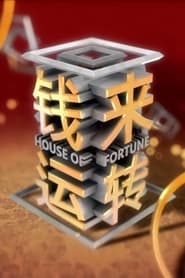
A behind the scenes look at Nickelodeon's House Of Anubis and it's secrets, presented by the stars of the show.House of Fortune
2016
House of Fortune
2016
Qian Renjie and Luo Shuping decide to sell their HDB flat and upgrade into a condominium. However, the upgrade comes with a hefty price, leaving the couple with no savings. Renjie’s sister, Qian Meiling, loves to purchase things on instalments. Her husband, Wu Guolun, is a spendthrift who is burdened with expensive car instalments. At work, Renjie is being oppressed by his superior and he resigns in a huff. Meanwhile, Shuping’s tactless nature gets the better of her and she soon finds herself under-performing at work. Guolun decides to pursue his dreams as a lyricist and quits his job. He spends a lot of effort on his songwriting but the response is underwhelming. To fulfil his dream, Guolun sells off his house for cash to start a music studio. Unfortunately, his partner fled with the money. Meiling hears that she has a relative who owns a bungalow, a senile old man named Qian Laoshi.The Adventures of Skippy
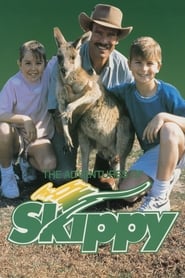
1992
star 6In this revival of the charming Aussie series, Sonny Hammond is a park ranger with two children Jerry and Louise. The kids are involved in adventures that often have an environmental theme. Kate Burgess is a researcher at the habitat.Güzel Köylü
2014
Güzel Köylü
2014
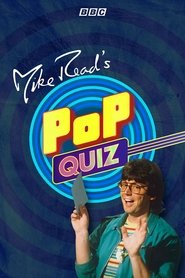
star 6.5A beautiful girl from Istanbul moves to a small village and that changes her life.Pop Quiz
1981
Pop Quiz
1981
star 6A British television quiz programme hosted by Mike Read that originally aired on BBC1 from 4 July 1981 to 28 December 1984, with a Top of the Pops special on 4 January 1994. It was then revived from 21 May to 9 July 1994 on the same channel but this time with Chris Tarrant in charge.Big Show
2017
Carnival Tar
2025
Animal Man
2012
Animal Man
2012
Granted the power to borrow the abilities of animals, Buddy Baker aka Animal Man is dedicated to saving them. And humans. Maybe.Belle's
2013
Belle's
2013
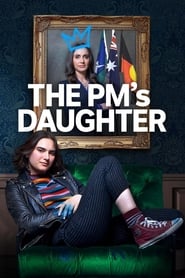
star 10The Cooper family runs an upscale Southern restaurant after wife and mother, Belle, passes away.The PM's Daughter
2022
The PM's Daughter
2022
star 4.7Cat is like any other teenager, with one difference - her mother is the new Prime Minister of Australia. Along with her new friends, Cat navigates life in the spotlight, while tracking down a hidden threat to her mum.Deadman
2013
Deadman
2013
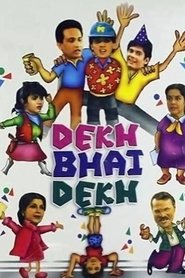
Deadman, an innocent, lonely little ghost, tries his best to do the right thing using his powers.Dekh Bhai Dekh
1993
Dekh Bhai Dekh
1993
star 7.2Dekh Bhai Dekh was one of the most popular comedy Hindi sitcom created, developed, edited, directed and line produced by Aanand Mahendroo, produced by Jaya Bachchan, starring, Shekhar Suman, Navin Nischol, Farida Jalal, Bhavana Balsavar, Deven Bhojani, Sushma Seth, Vishal Singh, Nattasha Singh lead roles. It premiered on Doordarshan's metro channel, on 6 May 1993 until 1997. Subsequently, there have been several re-runs on DD National, Sony TV, and SAB TV till 2005. It is considered as a classic, among Indian television shows.The story revolves around three generations of the Diwan family, who live as an extended family in an ancestral bungalow in the suburbs of Mumbai. The serial takes the viewer through their various ups and downs. Their never-say-die attitude helps them overcome sibling rivalry, relationship troubles, business problems, irksome parents and in-laws. A distinctive feature of this show were its fast speaking characters.