Family TV Series - Page 224

Home Shanti
2022
Home Shanti
2022
star 9The Joshi family slowly find out that there’s nothing shanti (peaceful) about building your dream home.Das Haus der Krokodile
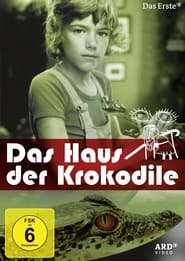
1976
star 8Das Haus der Krokodile is a 1976 German children's television miniseries based on the mystery novel by author, Helmut Ballot. Directed by Wilhelm ten Haaf, and starring Tommi Ohrner, the six-part miniseries premiered on the ARD on February 22, 1976.Les Edelweiss
2011
Never Too Late
2024
Never Too Late
2024
Ding Yonghan wins another case, seemingly securing her promotion. Her former best friend Luo Enqi joins the firm and becomes her competitor for the same promotion. As Ding Yonghan falls out with her go-to PI and is looking for a replacement, she runs into Zhenbin again.Father and Son of the Ma Family
1999
star 7Ma Ze Ren and his son Ma Wei arrive in London after the death of his older brother in order to carry on the family's small antique business.Hallo, det er jul!
1995
Hallo, det er jul!
1995
The sequel to the mega-hit "Jul i Gammelby." The story takes place in the early 20th century, when more and more women are becoming independent of men, and machines are making their mark. The baron outcompetes the clog maker with his new factory, much to the dismay of the town's children—so with the help of the elves, they do everything they can to tease the baron. Meanwhile, at the telephone exchange, the switchboard operator listens in on the conversations so that she is the first to know everything.老娘泪
2006
Pollyanna
1973
Pollyanna
1973
star 6.3After her father’s death, young Pollyanna moves east to live with her aunt Polly. Once there, the “Glad Game” her father taught her, begins to change the lives of the town’s residents. Based on the classics children’s book by Eleanor H. Porter.WOW
1992
Warm Happiness
2018
Warm Happiness
2018
Dynastie Nováků
1982
The Kids from 47A
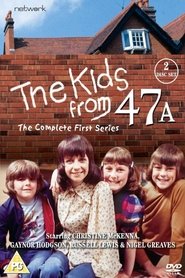
1973
The Kids from 47A
1973
star 7The Gathercole family live in number 47A, a flat in a small block. When the widowed mother is suddenly taken to hospital and hurried plans for an aunt to look after the children fall through, they decide to take care of themselves. When the Welfare authorities learn what is happening, a constant battle to prove they can take care of themselves, and avoid being but in the care of the local council commences.Monster Parent
2008
Monster Parent
2008
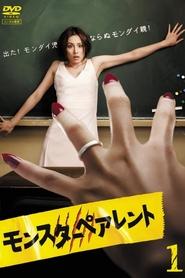
star 7Monster parents-a neologism that denotes parents who repeatedly make unreasonable demands to their children’s school and prevent it from functioning normally. Takamura Itsuki is the ace lawyer of a major law firm. One day, she is assigned on a case requested by a school board, and learns of the existence of "monster parents." She meets a parent who wants the school to fire a teacher with a dialect for fear that he may exert bad influence on her child, a parent who insists that her son get a regular position on the soccer team, a parent who refuses to pay the lunch fee because it doesn’t taste good and so on. She is, at first, reluctant about this case, but gradually becomes determined to solve the problems.The Masked Singer Azerbaijan
2023
star 8The first edition of the Azerbaijani version of the internationally licensed show "Mask", which is broadcast in more than 50 countries, was shown on Public Television. There are 12 masks in the program and behind each of them some Azerbaijani celebrity is hidden: "Participants come together on the principle of confrontation. Voting determines who stays in the show and who unmasks. The masks are so secret that even the family members do not know about their participation in this show."Licia dolce Licia
1987
Licia dolce Licia
1987
star 1Licia dolce Licia is an Italian television series. It is one of the four live adaptations of the Japanese manga Ai Shite Knight. It is the sequel to "Love me Licia" and was followed by "Teneramente Licia" and "Balliamo e cantiamo con Licia".Super Best Friends Forever
2012
Supergirl, Batgirl and Wonder Girl are the Super Best Friends Forever.My 50/50 Life
2016
My 50/50 Life
2016
star 7Child of divorced parents, Louis 12 years old, has two of everything - two homes, two sets of parents, two step siblings, two rooms and soon two personalities, because life feels pretty schizophrenic.Nós os Ricos
1996
Nós os Ricos
1996
Riding High
1995
Riding High
1995
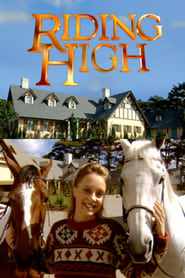
star 9Fifteen-year-old Wendy lives at Lindentree, a riding school and horse stud, with her parents Charles and Helen. Mad about horses and fiercely devoted to family and friends, Wendy's life primarily revolves around winning a place on the national junior show jumping team, and saving Lindentree from outside forces.