Family TV Series - Page 316

Brother Fire
2003
Brother Fire
2003
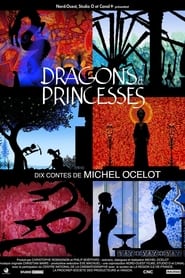
Animated series for the whole family, which takes place at the beginning of 1200 years. It tells the story of a Franciscan monk traveling and carrying wisdom and helping people. A lot of the beautiful words and biblical references.Dragons and Princesses
2010
star 8.8Dragons and Princesses is a 2010 French computer animation television program written, storyboarded and directed by Michel Ocelot and produced at Studio O for Canal+. It is a fairy tale anthology series of ten further 13-minute episodes in the format established in Ciné si. Five of the episodes are edited, with a feature-exclusive sixth, into the 2011 stereoscopic compilation movie Tales of the Night.Secrets at Red Rocks
2025
Secrets at Red Rocks
2025
Jake is drawn into a world of mythical creatures and adventure when he finds a sealskin hidden on the rocky shores of his father's seaside home in Wellington.Hoopla Doopla!
2014
Dads
2021
Dads
2021
star 9.7"Dads" traces the daily lives of four fathers and the challenges they face in dealing with their children. The characters have different professions, characters and social status, but are united by a common desire - to be good parentsLuftens Helter
2007
Luftens Helter
2007
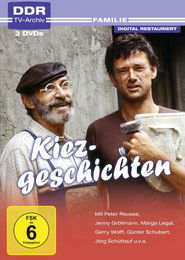
star 6.5Cutbacks in SAS allows the captain Odd Grenland and 2nd pilot Birger Wom get fired because they are too old. They buy a used aircraft with their own money, and together they start the company Senior Air.Kiezgeschichten
1987
Derbez en cuando
1998
À la recherche du temps perdu
2011
star 4.6Follows a young man, Marcel, from his childhood in Combray to his discovery of social life among the upper classes.Familie Bergmann
1969
Familie Bergmann
1969
Tere Mere Beech
2015
Tere Mere Beech
2015
"Tere Mere Beech" is a story of desire, misdirection, love, regret and gathering. The story highlights the lives of Hareem and Fahad, both belonging to varied backgrounds however have normal attributes of desire for cash and common joys. Hareem is raised by her auntie who is married into a well off family. Her aunt and uncle's unconditional love has made her self-obsessed, self-important and discourteous, and she sees herself misfit among her own blood relations. Her uncle Shabir Sahib chooses to pass on his wealth to Hareem however dies in an accident before he could compose his will.Extraordinary World With Jeff Corwin
2025
star 10Host Jeff Corwin teams up with everyday people who are making an extraordinary impact on the world through animal advocacy, wildlife conservation, youth empowerment and aiding those dealing with food insecurity issues.Esquadrão da Moda
2009
The Masked Singer: South Africa
2023
star 1Celebrity contestants compete in singing competitions, all while under complete disguse. The panelists must make their identity guesses with the help of clues and voices. Each night, the least popular Masked Singer is eliminated and must reveal their identity until there is just one winner.Sarah Palin's Alaska
2010
Sarah Palin's Alaska
2010
Sarah Palin's Alaska is an American television show hosted by former Alaska Governor Sarah Palin. According to Palin, the show's aim is to bring "the wonder and majesty of Alaska to all Americans". The series, which began airing on TLC in November 2010, was eight episodes long, and was part travelogue, part documentary series, according to a story in The Vancouver Sun, six months before the release of the series trailer. In reviewing the first episode, The New York Times said the show allows viewers to "observe Ms. Palin observing nature". In 2011, it was announced that the show would not be renewed for a second season. The show was produced by Mark Burnett Productions for Discovery Communications.The Opposite Direction
2025
Daria, after the tragic loss of her parents, is forced to fight for her place in life. Instead of support, she faces humiliation from her aunt Katerina, who should have stood by her.