Family TV Series - Page 344

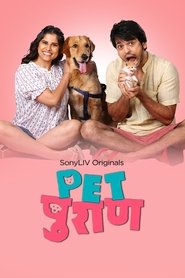
Pet Puraan
2022
Pet Puraan
2022
star 7Atul and Aditi are happily married, but their family is incomplete without a child. Will they manage to find their happily ever after?Mom and Co
2019
Mom and Co
2019
star 6“Mom, I’ll call you right back.” “Maa Abhi Nahin I’m busy.” “Mom I’m in a meeting.” Sounds familiar? A relationship we’ve all lived. A relationship we’ve often taken for granted. This is our story. We’ve just never paid attention to it. Until now.Princess Charming
2007
Princess Charming
2007
Princess Charming is a Filipino television drama series aired on GMA Network from January 29, 2007 to April 27, 2007 and was part of GMA’s afternoon programming block called Drama Rama sa Hapon. The series was directed by Argel Joseph. It recently re-aired, internationally on GMA Life TV.Tomtemaskinen
1993
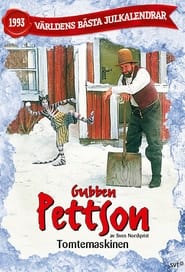
Tomtemaskinen
1993
star 6Christmas is in full swing at the home of the wayward old man Pettson and his mischievous cat Findus. Gingerbread cookies need to be baked, the tree needs to be cut down, Christmas presents need to be made and the Christmas cleaning needs to be done. But can there be any Christmas if you're not sure if Santa is coming?Pujaan Hati Kanda
2018
Pujaan Hati Kanda
2018
Tells the story of Danish/Danny Megat, a playboy who is determined to build a new life. However, on his wedding day, he received a 'gift' of a baby placed in the foyer of a mosque with a greeting card and birth certificate. His future wife, Nadine refuses to continue their marriage as the mystery of the baby's presence is unraveled. The wedding ceremony was canceled and Danny had to take responsibility for the baby. Danny is forced to find a caregiver that is willing to take care of as he investigates who Rizqy's mother really is and that Rizqy is his biological son. In trouble, Danny is met by Tiara, a university student who struggles with money. Danny kept the truth about the baby's identity. Tiara only knew Danny was a widower whose wife died. Unexpectedly, love begins to break between Danny and Tiara. At the same time, Danny is still trying to track down the mysterious girl for the truth in a way that even unravels the mystery that haunts his life.Fertig Lustig
2000
Fertig Lustig
2000
Doofenshmirtz's Daily Dirt
2013
star 6.8Doofenshmirtz's Daily Dirt was a weekly YouTube series starring Dr. Heinz Doofenshmirtz from Phineas and Ferb. In the 38 episode mini-series, Doofenshmirtz talked about current events, pop culture, music, the Internet, life, and all things perplexing.Alpen-Internat
1992
Alpen-Internat
1992
Comment devenir une légende
2016
Mat dreams of being at the head of the king's armies and to begin his ascent, he is running for president... of his class! If he succeeds in demonstrating his leadership for a year, his father will offer him a key position. Mat will try to shake up those odd fellows who particularly like to stroll on the Grand-Place.幻灯故事会
2020
幻灯故事会
2020
Mihrap Yerinde
2014
Mihrap Yerinde
2014
500T
2021
Kli-Kla-Klawitter
1974
Kli-Kla-Klawitter
1974
Max Glick
1990
Max Glick
1990
好一个大小姐
2025
好一个大小姐
2025
Hayati ve Diğerleri
2018
Captain Zep – Space Detective
1983
star 5.5Captain Zep – Space Detective is a British television children's series produced by the BBC between 1983 and 1984. Constructed as part drama and part quiz game, Captain Zep featured mysteries that would be solved by the child audience in the studio, along with a write-in competition for viewers. The child audience were dressed in futuristic clothes and had gelled hair. The series was also notable for its combination of live action and animation, where the cast would interact with drawn alien characters amidst drawn backgrounds. Paul Greenwood played the titular Captain Zep in the first series, to be replaced by Richard Morant for series two. Zep was assisted by Professor Spiro who was also replaced in series two by Professor Vana. The only cast member to appear in both series was Ben Ellison as Jason Brown. The theme tune "Captain Zep" was written by David Owen Smith and Paul Aitken and performed by The Spacewalkers.