Kids TV Series - Page 244

Voll TOGGO
2014
Voll TOGGO
2014
Muffin the Mule
1946
Muffin the Mule
1946
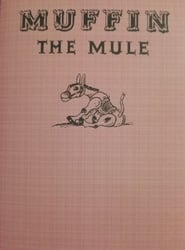
Muffin the Mule is a puppet character in British television programmes for children. The original programmes featuring the character were presented by Annette Mills, sister of John Mills, and broadcast live by the BBC from their studios at Alexandra Palace from 1946 to 1952. Mills and the puppet continued with programmes that were broadcast until 1955, when Mills died. The series then transferred to ITV in 1956 and 1957. A modern animated version of Muffin appeared on the BBC in 2005. The original mule puppet was created in 1933 by Punch and Judy puppet maker Fred Tickner for husband-and-wife puppeteers Jan Bussell and Ann Hogarth to form part of a puppet circus for the Hogarth Puppet Theatre. The act was soon put away, and the puppet was not taken out again until 1946, when Bussell and Hogarth were working with presenter Annette Mills. Shes named the puppet mule "Muffin", and it first appeared on television in an edition of For The Children broadcast on 20 October 1946.České pexeso
2011
České pexeso
2011
Ferdynand Wspaniały
0000
Ferdynand Wspaniały
0000
Żubr Pompik
2017
Żubr Pompik
2017
乐乐课堂:水浒传
2024
乐乐课堂:水浒传
2024
Cardfight!! Vanguard: Divinez
2024
One day, six cards known as the "Six Desires" were born with the power to change fate. Six fighters were chosen, and would come to possess those six cards. What awaited them was the "Fated Clash", where they would fight each other until the end, and the last one standing would have any wish granted. A youth named Akina Myodo, who wants to help his frail sister, participates in the Fated Clash to have his wish granted. And thus, he throws himself into battles with powerful fighters.Portveiens julekalender
1987
«Portveiens julekalender» is a Norwegian children's Christmas TV series that aired on NRK in December 1987. It was a special holiday edition of the beloved children's show «Portveien 2», which originally ran in the 1980s. The series follows the hosts Eli Rygg, Terje Strømdahl, and the puppet giraffe Raffen as they count down to Christmas with daily episodes filled with songs, storytelling, crafts, and festive preparations. Each episode offers a warm, cozy atmosphere with themes of kindness, creativity, and anticipation of the holiday season.Opa Popa Dupa
2019
Opa Popa Dupa
2019
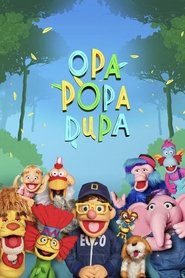
star 7.3A puppets show with a clear goal: to educate through entertainment. With songs, celebrities and lots of humor so that children can learn great values while they are still little and the grownups can feel proud. And they can all roar with laughter while watching Eco and Nube, the first NatGeo Kids explorers, trying to live with all the animals in the forest.Eena Meena Deeka
2015
Eena Meena Deeka
2015
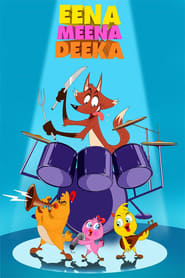
star 3Eena Meena Deeka is a story about a classic battle of wits between the three eponymous chickens and a hungry fox out to hunt them down. Eena is the smartest of the bunch and a scientist with a bevy of gadgets, Meena is always dolled up and the fox’s easiest target, and Deeka is the foodie and strongest of the bunch.Butternut Square
0000
Butternut Square
0000
Butternut Square was a Canadian children's television series which aired on CBC Television between October 19, 1964 and February 10, 1967. The cast featured Ernie Coombs as Mr. Dressup and Fred Rogers as Mister Rogers, both of whom would follow with their own landmark television series. "Butternut Square" was a show designed for young viewers and featured a variety of segments aimed at entertaining and educating children. The program included storytelling, music, puppetry, and educational segments, often focusing on imaginative play and interactive elements to engage its audience. The show aimed to stimulate creativity, encourage learning, and entertain children through a mix of fun activities and storytelling. Although specific details about individual episodes might vary, the overall emphasis was on fostering a sense of wonder, creativity, and learning in its young viewers.Jet and the Pet Rangers
2020
star 8Follow the adventures of Jet and his team of house pets as they use their extraordinary powers to rescue troubled animals in a provincial town named Baryo Mahayop.Jason and the Heroes of Mount Olympus
2001
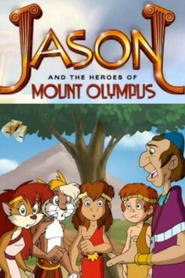
star 6Jason is a twelve-year-old with fantasies of becoming a hero just like those in the mythological battles of the Ancient World. He is in for a surprise as his dreams become a reality when he climbs to the top of Mount Olympus and fulfills an ancient prophecy, turning Jason into the “chosen one”. Jupiter, King of the Immortals, gives him the Belt of Orion which allows him to exist on Mount Olympus and gives him control of the universe. The evil Dracchus seeks the all-powerful amulet and it is up to Jason to keep the belt and save Mount Olympus!Phoebe & Jay
0000
Phoebe & Jay
0000
Follow the adventures of 6-year-old fraternal twins Phoebe and Jay Yarber, who live with their family in the fantastical Tobsy Towers.O pradědečkovi
1965
O pradědečkovi
1965
Tomatoman
1992
Tomatoman
1992
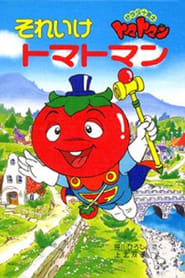
Tomato is one of the 10 knights of the salad kindom. Young and clumsy, yet always ends up saving the day and is admired by everyone even the pretty princess peach, who he desperately falls in love with. Every episode they embark on a new journey to solve a new mission. This would be easier if only the insect band didn't get in their way every time.Mind Wars
2020
Mind Wars
2020
star 2Mind Wars is a quiz game show comprising four teams of two students from grade six to ten, and hosted by Shreyas Talpade. They are asked general knowledge questions about India and its current affairs. The team that answers the questions correctly wins the title of Mind Wars Champions.碰碰狐儿歌之特别节日系列英文版
2016
碰碰狐儿歌之特别节日系列英文版
2016
Petronella Apfelmus
2020
Petronella Apfelmus
2020