Kids TV Series - Page 73

三只松鼠
2018
三只松鼠
2018
Idol Time PriPara
2017
Idol Time PriPara
2017
star 4The story focuses on Yui, a girl who lives in the town of Paparajuku, and who dreams of being an idol, even if she realizes that being an idol is next to impossible for her. Her friends often remark on how much she dreams about it. But then, the PriPara idol theme park opens in her town, and that an idol named Laala is coming to town from Parajuku, which only makes Yui dream even bigger. The new PriPara theme park has been updated with new concepts. However, due to a system error, Laala is no longer able to PriPara Change.宝贝赳赳之探索大自然
2023
宝贝赳赳之探索大自然
2023
WordWorld
2007
WordWorld
2007
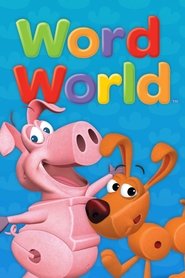
star 7.8WordWorld is an Emmy Award-winning children's television series partially funded by the United States Department of Education as part of the Ready to Learn literacy initiative targeted to 3- to 7-year olds. The show airs in 10 languages and 90 countries, including in the United States. The television series, created by Don Moody and Jacqueline Moody, stars Dog and his WordFriends. In each episode, Dog and/or one of his friends embarks on a series of adventures where the only way to save the day is to build or un-build words. The show's novelty is that when a word is built correctly, it morphs into the thing it represents, which gives instant meaning to the word. WordWorld has been translated into popular mobile applications, Internet-based games, magnetic plush and other toys. WordWorld currently airs in 90 countries and 10 languages. It premiered September 3, 2007 on PBS Kids and is currently in its third season, with 84 11-minute episodes. WordWorld currently broadcasts on PBS Kids it is produced for WTTW ChicagMr. Meaty
2006
Mr. Meaty
2006
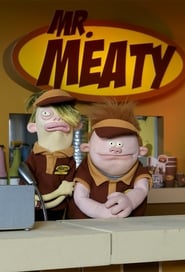
star 5.3Mr. Meaty is an American/Canadian television series, airing on CBC Television in Canada and the Nicktoons Network in the United States. It originally began in 2004, as a series of interstitial shorts that aired on Nickelodeon. It features the voices of Jamie Shannon, Jason Hopley, Marty Stelnick, and Todd Doldersum. The show is about two lazy teenage boys named Josh and Parker working at a fast food restaurant called Mr. Meaty located inside the Scaunchboro Mall. The program ran from September 22, 2006 until May 23, 2009 when production was subsequently cancelled due to poor reviews and low ratings and is now officially out of sydnication.IMP
2006
IMP
2006
star 7.7IMP Is a 3D animated comedy created by Andy Fielding which takes place in the lair of the devil and its surroundings. Bad but fun, small but lovely, Imp tries to fill the world of evil but do not know how. Some of his characters are his brother Bob, the less intelligent and Philippe Bertrand, Lumen his nemesis, rival Cat-Thing and Big Boss. The Imp was developed in black and white with a minimalist design. The series was created by the Production house, Red Kite Animations, developed with Screen 21 and distributed by BRB Internacional. Was supported by TVC and consists of 65 episodes of 90 seconds each. Imp has been issued in major chains from different countries like Cartoon Network, Disney Japan TVC and Antena 3 in Spain. Voiced by Stephen Mangan and Julian Rhind-Tutt from the UK TV series "Green Wing".Voltron: The Third Dimension
1998
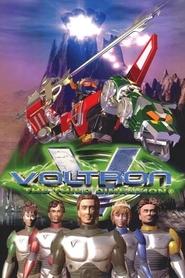
star 8.3When the evil Prince Lotor escapes from prison and forms an alliance with Witch Haggar to create monstrous new Robeasts to threaten the galaxy, it's up to the Voltron Force to once again defend the universeThe Wind in the Willows
1984
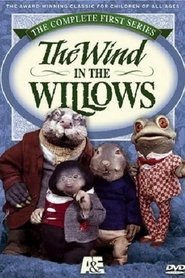
star 7.6The Wind in the Willows is a TV series that was originally broadcast between 1984 and 1987, based on characters from Kenneth Grahame's classic story The Wind in the Willows and following the 1983 film The Wind in the Willows. It was made by animation company Cosgrove Hall for Thames Television and shown on the ITV network. An hour-long feature, A Tale Of Two Toads, was broadcast in 1988, and a fifth season of 13 episodes was shown in 1989 under the title Oh! Mr Toad in some countries, whilst retaining the title The Wind in the Willows in others.Sky Commanders
1987
Sky Commanders
1987
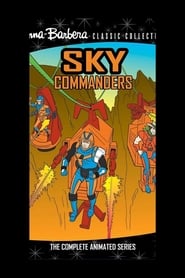
star 7.6Deep in the South Pacific, a tumultuous and untamed new continent has erupted, spawned by a highly unstable new element, known as Phaeta-7. If this powerful new element could be controlled, whoever possessed it would be the undisputed ruler of the world! One man, General Lucas Plague, is determined to hold that title. And it's up to a rugged team of mountaineering experts, led by Commander Mike Summit, to stop him.Chess Player
2005
Chess Player
2005
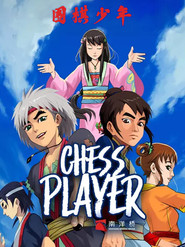
star 8Chess Player is a children's animated series. It was produced in China. The show spans two seasons with 26 episodes in each. The story focuses on the journey of a young gifted chess player, Jiang Liu'er. The first season first aired on CCTV in 2006. The second season, called Chess Player 2, aired in 2009.Middlemost Post
2021
Middlemost Post
2021
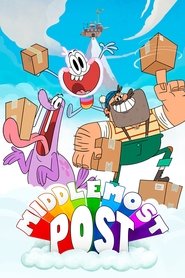
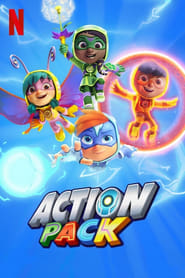
star 7.8When a reformed raincloud teams up with a shipwrecked sea-postman and a magic walrus, the three form the Middlemost Post — the wackiest and most loveable postal service on Mt. Middlemost.Action Pack
2022
Action Pack
2022
star 7.6The heroic kids of the Action Academy take on the bad guys with their hearts, their wits and their superpowers, and bring out the best in them.Kate & Mim-Mim
2014
Kate & Mim-Mim
2014
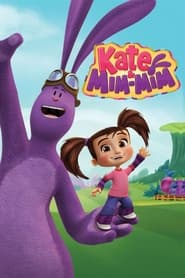
star 5A little girl and her plush bunny go on incredible adventures in the imaginary land of Mimiloo.小牛向前冲
2009
1,2,3... Géant!
2011
Bakutsuri Bar Hunter
2018
Bakutsuri Bar Hunter
2018
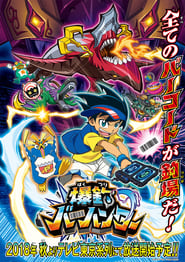
star 10Totta loves to fish. One day a bar soul named Potepen appears from the barcode on Totta's bag of potato chips. Together, Totta and Potepen use a special "Bakutsuri" bar rod item to fish for other bar souls.Wing Commander Academy
1996
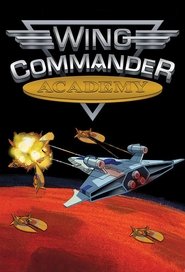
star 7.4In the year 2655, a group of new graduates of the Space Naval Academy replaces the crew of a refurbished ship to complete training, but members find themselves taking part in a very real battle against the Kilrathi.Mr. Magoo
2019
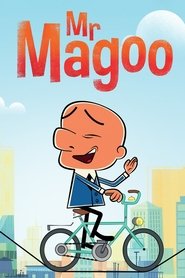
Mr. Magoo
2019
star 7Mr. Magoo, the eponymous kind-hearted fellow is always happy to lend a hand, but often causes disasters instead as without his glasses he makes all kinds of chaotic mix-ups. Despite this, his only enemy is his neighbor Fizz: a megalomaniacal hamster and his human minion, Weasel, who are somehow always accidentally thwarted by Magoo.My Little Pony: Equestria Girls
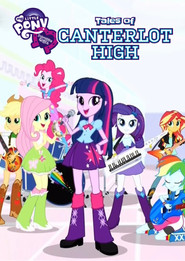
2017
star 7.9Full-time students and part-time magical pony-girls, the Equestria Girls are always ready to save the day with the Magic of Friendship!Simba: The King Lion
1995
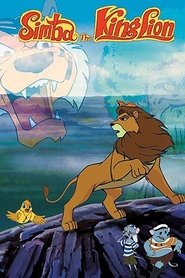
Simba: The King Lion
1995
star 6.3After the lion king is shot by hunters, the other animals of the jungle decide to work together to raise his orphaned lion cubs, including his favorite son, Simba. Simba and his siblings end up being raised by a wolf along with a deer named Buckshot (changed from Bimbo to avoid being a walking copyright infringement), who had also previously lost his parents to hunters. It turns out the tiger Shere Khan was the one who arranged the death of Simba's father so he could be the king of the jungle, and he wishes to capture Simba with the help of his minions.