News TV Series - Page 24

CBS Evening News Plus
2025
Alongside the new Evening News, CBS also announced that it would introduce a half-hour extension—CBS Evening News Plus—anchored by Dickerson, which premiered two weeks later on February 10, 2025.The Five
2011
The Five
2011
star 6The Five is an American talk show on Fox News Channel featuring a rotating panel of contributors who discuss current political issues and pop culture. The show premiered in July 2011, replacing the Glenn Beck program, and airs on weekdays at 5:00 p.m. ET with replays at 2:00 a.m. ET. On October 3, 2011, after successful ratings and high popularity, Fox News announced that The Five would become the permanent 5p.m. series, as the program was previously announced to last only during the summer. The Five is currently the second-most-watched program in all of cable news in the United States, placing only behind The O'Reilly Factor.Sammy J
2018
Sammy J
2018
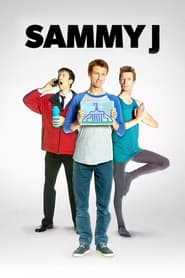
Biting, bite-sized comedy as Sammy J rips into the political machinations of Canberra and beyond. With an insatiable appetite for politics, Sammy blends comedy and song where he can harass and heckle the politics of the day.The Night Is Young
1997
The Night Is Young
1997
The program "The Night Is Young" was aired twice a week on Mondays and Fridays on REN TV in 1997-1998. A total of 38 programs were aired. Among the guests and participants of the program are Eduard Nazarov, Nina Eremina, Yuri Mamin, Eldar Ryazanov, Mikhail Ulyanov, Grigory Chukhrai, Vladimir Molchanov, Vitaly Mansky, Andrey Dementyev, Yuri Rost, Lyudmila Gurchenko, Alexander Shirvindt, Mikhail Derzhavin, Gennady Khazanov, Grigory Gorin, Vladimir Spivakov, Sergey Korzun, Pyotr Fyodorov, Irina Mishina, Irena Lesnevskaya, Dmitry Lesnevsky and others.heute journal
1978
Need to Know
2010
Need to Know
2010
Need to Know is an American public television news program produced by WNET, and broadcast weekly on all Public Broadcasting Service (PBS) affiliate-stations in the United States. It aired from May 2010 until June 2013. PBS stated that the show was intended to fill the public-affairs and "hard"/investigative news void left by both the one-hour Bill Moyers Journal, and the cancelled, half-hour NOW on PBS. Both departing shows had been long-running, highly rated, and critically acclaimed for their journalistic quality, and focus on issues that deeply impacted regular Americans' lives, yet went largely ignored by commercial TV news outlets. "NTK" branded itself the "TV and Web newsmagazine [that] gives you what you need to know." PBS had described the show as “a multi-platform current affairs news magazine, uniting broadcast and web in an innovative approach to news-gathering and reporting."Al Bernameg
2011
Al Bernameg
2011
star 8.6Al Bernameg is a popular Egyptian satirical program. The series is hosted by satirical comedian Bassem Youssef on the satellite channel CBC. The press has compared it to The Daily Show hosted by Jon Stewart, which was the inspiration for this show. Youssef visited The Daily Show as a guest in April 2013, while Stewart, on hiatus from his own hosting duties, returned the favor on El Bernameg in June 2013.Schulman Show
2009
Schulman Show
2009
Schulman show is a web-TV program on aftonbladet.se which premiered 30 October 2009. It is structured as a talk show in which TV host Alex Schulman talks with recurrent Ann Söderlund and Markus Larsson and usually a guest in each program. The topics are current entertainment events. Each program has had between 350,000 and 500,000 viewers, making it the Swedish breakthrough for Web TV.P3morgen på TV
2015
P3morgen på TV
2015
This is a 29 minute long summary of the morning show "P3morgen". P3morgen is a Norwegian radio program, with Silje, Markus and Ronny, which are broadcast every weekday from 6am to 9am.The Way It Is
1967
The Way It Is
1967
"The Way It Is," a Sunday night one-hour show, aired from September 1967 to June 1969. Under the executive production of Ross McLean, following the success of similar CBC programs, it attracted up to 60 contributors, aiming to challenge viewers with compelling content. Hosted by John Saywell and Barbara Frum, who honed her interviewing style here, it featured Patrick Watson, Warren Davis, Percy Saltzman, Ken Lefolii, Peter Desbarats, and Moses Znaimer. Segment producers like Perry Rosemond and Peter Herrndorf worked on the show, which covered diverse topics via studio interviews, music, commentary, panels, and documentaries. While not pushing controversy, it contributed to national dialogue. Notable productions included documentaries on airline safety and Vietnam, setting a serious tone for its era. Its influence extended to later CBC shows like the fifth estate and The Journal.The Briefing with Jen Psaki
2025
star 5Jen Psaki tackles the biggest issues of the week and features one-on-one interviews with newsmakers.Mésnit
2015
Mésnit
2015
Rock Center with Brian Williams
2011
Rock Center with Brian Williams was an American weekly television newsmagazine that was broadcast by NBC and hosted by NBC Nightly News anchor Brian Williams. It debuted on October 31, 2011, and aired on Mondays until January 30, 2012. It aired on Wednesdays starting February 8, 2012. It was produced in the Rockefeller Center's "Studio 3B", the same space as NBC Nightly News, and formerly that of the Today Show. Named after the location of the NBC News headquarters in the GE Building at 30 Rockefeller Center, the program was the first new NBC News program to launch in primetime since Now with Tom Brokaw and Katie Couric debuted in 1993. Rock Center was designed to be more serious than NBC's existing prime time newsmagazine, Dateline NBC, which had increasingly delved into human interest and true crime stories, and had switched from a multiple-story format into a single story format. On May 10, 2012, NBC announced that Rock Center had been removed from the schedule for the remainder of the May 2012 sweeps periodThe 1UP Show
2005
The 1UP Show
2005
Welcome to 1UP's new weekly show on the latest and greatest from the world of gaming. Each week, the editors of 1UP cover new titles and discuss the latest topics in gaming - all the while giving you a behind the scenes look at the on goings at the offices of 1UP, Electronic Gaming Monthly, Computer Gaming World, and the Official. U.S. PlayStation Magazine.druckfrisch
2003
Catalyst
2014
Catalyst
2014
Catalyst is Australia's premier science investigation series. Each week the team brings you stories from Australia and around the world, meeting scientists at the forefront of discovery.Our America with Lisa Ling
2011
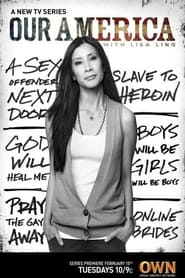
star 9Lisa Ling takes viewers along for an in-depth look at some of the most controversial and thought-provoking issues in the United States today, including religious movements, sex offenders, drug addiction and online brides. In each episode, Lisa immerses herself into the lives of the people she meets, offering compelling accounts of varied experiences and providing insight into some of our nation's most contentious issues. In sharing these stories, Lisa challenges viewers to understand different perspectives and even question what they themselves have always known to be true.Bubo bubo
2011
Bubo bubo
2011
Treffpunkt New York
1961
Treffpunkt New York
1961