News TV Series - Page 43

Forensic Firsts
2012
Explainer
0000
Explainer
0000
Happening Now
0000
Happening Now
0000
Happening Now is a news program broadcast on the Fox News Channel weekdays at 11:00 a.m. Eastern Time.Le JT du Gorafi
2024
Sunday Best
1993
Sunday Best
1993
Sunday Best was GMTV's original Sunday magazine programme, launched in January 1993. It was originally intended to be a Sunday edition of the regular weekday programme, featuring the regular lifestyle and human interest stories, interviews, and news bulletins.Nova
1992
Nova
1992
Nova / Den Haag vandaag was a late-evening current affairs programme broadcast from Monday to Saturday on the Netherlands Public Broadcasting channel Nederland 3 (later Nederland 2) between 1992 and 2010. Nova, the first and main part of the programme, was made jointly by VARA and NPS and featured news analysis and background reports. While NOS produced Den Haag vandaag, the segment of the programme covering events in parliament and interviews with politicians. The programme was also broadcast on the Dutch language international channel, BVN.The Newscast with Wolf Blitzer
2022
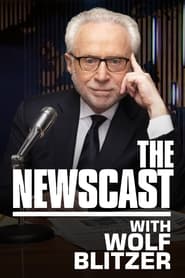
CNN Anchor Wolf Blitzer gives it to you straight, hitting the headlines you need to know on this traditional evening newscast with a sleek, modern twist. The old-school nostalgic approach featuring original reporting from around the world, investigations and consumer focused stories that matter helps put the latest headlines in perspective.The Digg Reel
2008
The Digg Reel
2008
star 8Every week, The Digg Reel covers top rated videos from Digg.com, the most popular social news site with thousands of contributors scouring the web for you. Join host Andrew Bancroft as he adds the stories and people behind the videos you can't stop watching.Gente Que Não Sabe Estar
2019
Portuguese comedian Ricardo Araujo Pereira brings his persona to this new weekly news satire program.Who Said That?
1948
Who Said That?
1948
Who Said That? is a 1947-55 NBC radio-television game show, in which a panel of celebrities attempts to determine the speaker of a quotation from recent news reports. The series was first proposed and edited by Fred W. Friendly, later of CBS News.The Trot News
2022
The Trot News
2022
Don't Tell Anyone
2023
Don't Tell Anyone
2023
star 7.9The story behind the crime that occurred in the summer of 2016 in Pioz, a small town in La Alcarria, where the lifeless bodies of a Brazilian couple and their two children were found.社会能见度
2003
社会能见度
2003
QR
2021
QR
2021
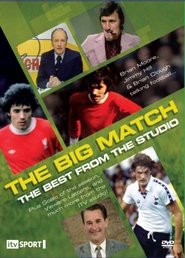
The Big Match
1968
The Big Match
1968
star 10The Big Match is a British Association football television programme, which screened on ITV regularly between 1968 and 1992. The Big Match originally launched on London Weekend Television, the ITV regional station that served London and the Home Counties at weekends, screening highlights of Football League matches. Other ITV regions had their own shows, but would show The Big Match if they were not covering their own match – particularly often in the case of Southern and HTV. The programme was set up in part as a response to the increased demand in televised football following the 1966 FIFA World Cup and partly as an alternative to the BBC's own football programme, Match of the Day. The Big Match launched the media career of Jimmy Hill, who appeared on the programme as an analyst, and made Brian Moore one of the country's leading football commentators. The Big Match originally screened match highlights on Sunday afternoons but in 1978 ITV audaciously won exclusive rights to all league football coverage, inOn Assignment with Richard Engel
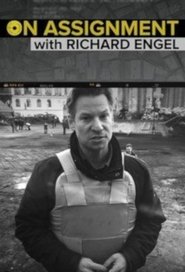
2017
On Assignment with Richard Engel follows the NBC News correspondent as he reports on stories around the world. He draws from his twenty years of experience of original reporting from the field to host this series which features in-depth reporting and interviews with key figures around the world.Breakfast Television
2010
Breakfast Television
2010
Breakfast Television, also known as BT, is a Canadian morning news and entertainment program produced by CITY-DT. The program airs from 5:30 a.m. until 9 a.m. ET each weekday, except holidays. Since October 3, 2011, it is also simulcast on cable-exclusive CityNews Channel, with a half-hour extension aired exclusively on the channel that runs from 9-9:30 a.m. Four other Citytv owned-and-operated stations use the name and the format, creating content relevant to their own local audiences. A stations produced their own similar morning shows under the name A Morning, although due to budget cuts, many of them have been canceled as of 2009. BT tends to be more relaxed and spontaneous than American morning shows. Unlike American morning shows, it does not have pre-taped segments that are focused on current events or socio-political issues. The guests tend to be more human interest, informational, and promotional in nature and there is less of a focus on celebrities.Putins Agenten
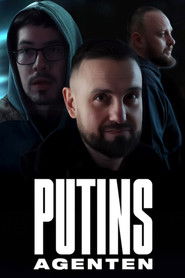
2026
Putins Agenten
2026
star 10This three-part investigative documentary follows former members of Russian intelligence who reveal how the Kremlin’s spy networks operate. Through insider testimony and expert analysis, it examines recruitment methods, covert missions, cyber operations, and the mechanisms used to silence opposition and project influence abroad under Vladimir Putin’s rule.Os Pingos nos Is
2017
Os Pingos nos Is
2017
60 Seconds
2001
60 Seconds
2001
60 Seconds is a news programme which runs between shows on BBC Three. It broadcasts under the BBC News format and branding. The weekday presenter is Sam Naz, whereas the weekend bulletins are presented by Claudia-Liza Armah. Previous presenters include Tasmin Lucia-Khan, Andy May, Matt Cooke, James Dagwell and Nick Young.