Sci Fi Fantasy TV Series - Page 295

Monster List
2014
Monster List
2014
star 7.8A story about two young demons who are always slacking off at work, a place that happens to be an organization that vows to keep the balA foxy temptress. A strange misty tree demon. A girl with the power of the goddess Xianjia! Being caught between these women is a feat in it of itself, but our hero Feng Xi must fight in order to protect the peace and save the world!ance between the worlds of the living and dead by killing humans!Seven Gods, Two Demons
2023
star 8.5Seven brothers who are the sons of the Jade Emperor are sent to the mortal world to experience life as humans and learn about life's joys and sorrows. The seven brothers are each given a gourd with a special power, and they use these powers to help people and overcome obstacles.Keluang Man
1998
Keluang Man
1998
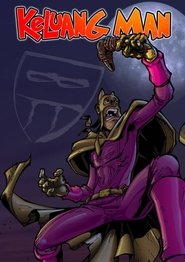
Set in Tampoi, Johor (near Johor Bahru), Keluang Man made his first appearance in an alley where a man is trying to rob a girl. Since then, Keluang Man has been media's most wanted. Keluang Man's real name is 'Borhan' and he is actually one of the mental patients in Tampoi Mental Hospital. The hospital security makes it hard for Keluang Man to act during daylight, so he decided only to fight for justice at night.Transformers: Power of the Primes
2018
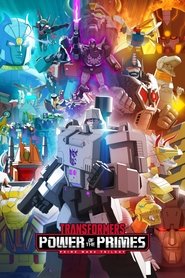
star 8.8In the aftermath of the Titans' conflict that concluded into Optimus Prime's death, the rest of the Transformers must stand together in order to stop Megatronus from wiping out their species forever. During their search for the Requiem Blaster, more mysteries about Cybertron’s past will be uncovered, and a new Prime will be chosenSpace Patrol
1963
Space Patrol
1963
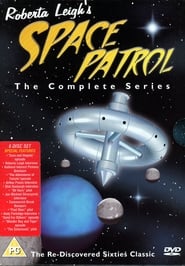
star 6Space Patrol is a science-fiction television series featuring marionettes that was produced in the United Kingdom in 1962 and broadcast beginning in 1963. It was written and produced by Roberta Leigh in association with the Associated British Corporation.Wolf Guy
1992
Wolf Guy
1992
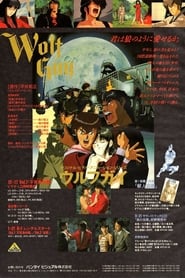
star 6Akira lnugami is infected with a terrible poison, and the only known antidote has an unfortunate side effect – it turns him into a werewolf. He opts for survival but then has to cope with his new desires and with the attention of the military, which is interested in using his affliction for its own purposes.The Sword of Dawn
2022
The Sword of Dawn
2022
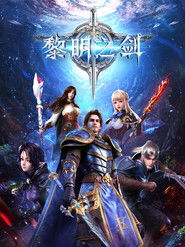
star 4Gawain transmigrated, but his transmigration had a little problem. After floating in the sky of a continent from a different world for hundreds of thousands of years, he thought that he probably needs a body to be considerd a complete transmigrator, however he didn't expect that after managing to get a body with great difficulty, he unexpectedly has to crawl from his coffin, moreover, he has to face two scared ladies that are his great-great-great......... great-granddaughters. As well as a world that it's about to arrive at its era's conclusion.Zero
2021
Zero
2021
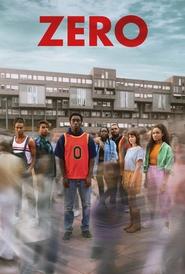
star 7.2A teenager who can make herself invisible is used by an idiot to take control of the neighborhood and then meets a mysterious art student.Four Feather Falls
1960
Four Feather Falls
1960
star 6Four Feather Falls was the third puppet TV show produced by Gerry Anderson for Granada Television. It was based on an idea by Barry Gray, who also wrote the show's music. The series was the first to use an early version of Anderson's Supermarionation puppetry. Thirty-nine 13-minute episodes were produced, broadcast by Granada from February until November 1960. The setting is the late 19th-century fictional Kansas town of Four Feather Falls, where the hero of the series, Tex Tucker, is sheriff. The four feathers of the title refers to four magical feathers given to Tex by the Indian chief Kalamakooya as a reward for saving his grandson: two allowed Tex's guns to swivel and fire without being touched whenever he was in danger, and two conferred the power of speech on Tex's horse and dog. Tex's speaking voice was provided by Nicholas Parsons, and his singing voice by Michael Holliday. The series has never been repeated on British television, but it was released on DVD in 2005.来自未来的史密特
2015
来自未来的史密特
2015
Age of the Living Dead
2018
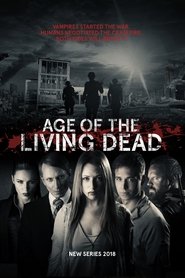
star 4.8In an America quarantined by the rest of the world, humans and vampires co-exist on opposite coasts thanks to a peace treaty, while each side plots to destroy the other.Teenagers in Space
2024
Teenagers in Space
2024
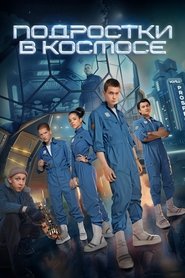
star 7.5Due to environmental problems, the average age of Earthlings is rapidly decreasing. Teenagers will have to help humanity — the guys will fly to the asteroid for a life-saving substance. A struggle begins between teenagers for the right to go into space. Everyone has their own motives: Kirill is a guy from a disadvantaged area, if he does not get into space, he will go to prison. Anya, the daughter of a famous cosmonaut who did not return from the same asteroid, wants to figure out his death. They will have to join forces to understand what happened in the past and who is threatening them in the present.Royal Doctor
2023
Royal Doctor
2023
star 5.7Bua, a medical student from today’s 5G era, is mysteriously swept back to King Rama III's reign – the golden era of Thai traditional medicine. Immediately thrown into an unknown world where she finds allies and rivals, her modern ways inevitably clash with old traditions.Vampire Flower
2014
Vampire Flower
2014
star 6.6Louis is a centuries old vampire who appears to be a teenager. He has fallen in love with Seo-young, a high school student with extraordinary blood. Together, they trek through the land of the vampires to retrieve a long lost flower.TigerSharks
1987
TigerSharks
1987
star 5TigerSharks is an American animated children's television series developed by Rankin/Bass and distributed by Lorimar-Telepictures in 1987. The series involved a team of heroes that could transform into sharks and other marine animals and resembled the series ThunderCats and SilverHawks, also developed by Rankin/Bass. The series lasted only one season with 26 episodes and was part of The Comic Strip show, which consisted of four animated shorts: TigerSharks, Street Frogs, The Mini Monsters, and Karate Kat. The animation was provided by Pacific Animation Corporation. Warner Bros. Animation currently owns the series, as they own the 1974-89 Rankin/Bass library, which was incorporated into the merger of Lorimar-Telepictures and Warner Bros.Guardian Angel
1978
Guardian Angel
1978
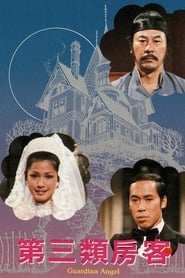
"Guardian Angel" is a hilarious and satirical comedy about ghosts. The story takes place in an old house where a couple lived until the wife's infidelity is revealed and the husband decides to murder her lover. In the process, they accidentally kill the construction worker Ah Kit, whose ghost haunts the place. The couple sells the house to newlyweds Tang and Ma who face a series of strange occurrences. As they settle in, they realize that the ghost is friendly and helpful, even assisting with household chores. The couple becomes friends with the ghost, and she helps them with everything she can. Eventually, the kind-hearted ghost must be reincarnated, leaving the couple heartbroken. The film's hilarious antics suggest that humans and ghosts can coexist in harmony, while humans living together may have issues among themselves.Super Ma'am
2017
Super Ma'am
2017
Minerva Henerala is a softhearted and dedicated high school teacher who loves her students despite their naughtiness inside the classroom. Years ago, she lost her mother and sister to a tragic archaeological accident. At the same site, she had a close encounter with mythical glowing winged-creatures and shapeshifters called Tamawo, and she grew up believing that they exist among humans. As the years go by, the Tamawos abduct children to feed on their youthful energy. Now it is up to Minerva's alter-ego, Super Ma'am, to become a Tamawo hunter and save the human world.Atropa
2018
Atropa
2018
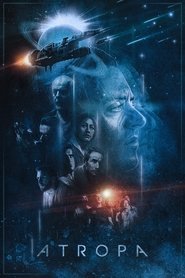
star 7.3A troubled Off-World Officer, running from his past, finds himself slammed directly into it when he boards the mysterious spaceship Atropa. A love-letter to the grungy science fiction movies of the 1970s and 80s.Out of the Box
1998
Out of the Box
1998
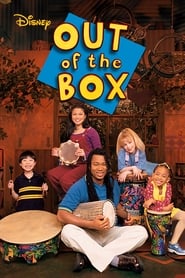
star 7Every day, a small group of neighborhood children come and play in "The Box," an imaginary clubhouse made entirely out of painted cardboard boxes. Along with their two caregivers, Tony James and Vivian Bayubay McLaughlin, the kids play games, do crafts, sing songs, and act out stories in the box.Kamen Rider Zero-One Short Anime: Everyone's Daily Life
2020
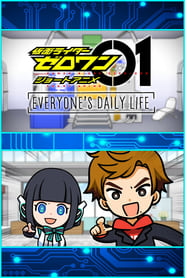
Kamen Rider Zero-One Short Anime: Everyone’s Daily Life is an anime mini-series featuring characters from Kamen Rider Zero-One. This mini-series is exclusive to Toei Tokusatsu Fan Club (TTFC) members.