Sci Fi Fantasy TV Series - Page 342

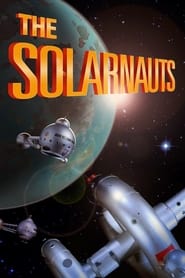
The Solarnauts
1967
The Solarnauts
1967
A variation on the format of Space Patrol, featuring an organisation operating a fleet of patrol craft responsible for protecting the Earth and other Solar planets.One Night Steal
2019
One Night Steal
2019
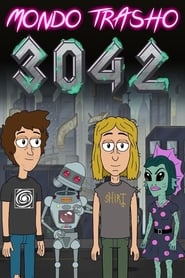
star 7Je is a girl who has luck all the time, while Not has bad luck. One night these two, came across each other and their luck reversed. Je was unhappy about this settlement, so she's planning to get her luck back.Mondo Trasho 3042
2020
DARK MACHINE THE ANIMATION
0000
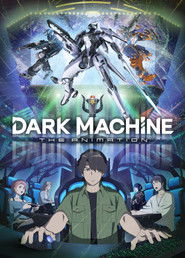
Popular esport DARK MACHINE captivates people all over the world and has transformed the economy of Japan, where there is an exclusive economic zone called "Golden Valley." Ajima is the seventh "Senki" — a title given to the game's strongest player — and effectively controls the region through DARK MACHINE. Protagonist Kairi arrives in Golden Valley with his late grandfather's final words in mind: "Find Senki." He then happens upon a young girl named Rudora, who is being pursued by Ajima's subordinate. Kairi becomes a DARK MACHINE player after connecting with Rudora, and his talent blooms with each fierce battle. Will Kairi be able to hold his own against Senki and carve out his own destiny?Lan Mo's Flower
2017
Lan Mo's Flower
2017
Ordinary girl Lan Mo once got a headdress flower which could transform her into a dream girl. She use this image to chase her childhood sweetheart, Liu Yi Feng. The story happens between them is sweet and touching.Magical Girl Pretty Sammy
1995
star 9.4Sasami's always been kind of neat... but now she's been imbibed with a healthy dose of magic (which she plans to use to right the things wrong with the Earth, and, of course, help keep her brother Tenchi out of trouble). Naturally, there's going to be trouble: this time, it's the mysterious Pixy Misa... and Ryoko going at it against Ayeka (as usual) isn't making things any easier for her!CBS Children's Film Festival
0000
CBS Children's Film Festival is a television series of live action films from several countries that were made for children. Originally a sporadic series airing on Saturday mornings, Sunday afternoons, or weekday afternoons during the summer from 1967, it became a regularly scheduled program in 1971 on the CBS Saturday morning lineup, running one hour with some films apparently edited down to fit the time slot. The program was hosted by 1950s television act Kukla, Fran and Ollie, aka puppeteer Burr Tillstrom and actress Fran Allison. Kukla, Fran and Ollie were dropped from the series in 1977 and the program was renamed CBS Saturday Film Festival. In 1978 CBS canceled the show in favor of the youth targeted magazine 30 Minutes which was modeled after its adult sister show 60 Minutes. CBS canceled 30 Minutes in 1982 and brought back Saturday Film Festival which ran for two seasons until CBS cancelled it for good in 1984. Perhaps the most famous "episode" of the series was the 1960 British film Hand in Hand, the stoLa Brigade des maléfices
1971
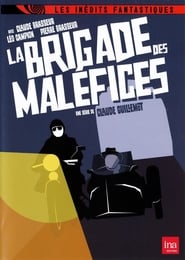
star 5.5A fictional division of the National Police is tasked with the investigation of supernatural casesHEART ATTACK
2025
HEART ATTACK
2025
In a post-pandemic world, gene therapy has saved the human race from disease but has given birth to Variants: people with powers so unique, the government denies their human rights. Based on the graphic novel series of the same name by Shawn Kittelsen and Eric Zawadzki.Miss A.I. White
2026
Miss A.I. White
2026
Two humanoid AIs descend to Earth to heal, protect, and repay a debt—but love, fear, and ethics push them to the brink of war and heartbreak.Kamen Rider Fourze The Net Edition: It's Class Time, Everyone!
2012
Kamen Rider Fourze the Net Edition: It's Class TIme, Everyone! is a series of net movies released by Toei to promote the Kamen Rider Fourze summer movie, Kamen Rider Fourze the Movie: Everyone, Space is Here!, with a total of 28 webisodes. Toei Tokusatsu BB and TV Asahi began distribution on July 13, 2012.Devil's Due
1979
Devil's Due
1979
During WW2, a young student of medicine comes to the big city to discover the secret of death, and stays at a motel that turns out to be a brothel. He is asked from Ustasha officer to perform experiments of resurrecting the dead, while the Fascist authorities look for a female communist hiding in the city.Rebuild World
0000
Rebuild World
0000
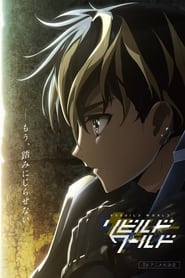
The pinnacle of human civilization has come and gone, leaving only ruins in its wake. Society and science now struggle to rebuild, rediscovering scraps of knowledge from powerful ancient artifacts that defy comprehension. These relics of the “Old World” can make the fortunes of those who find them—if ancient security systems and rogue bioweapons don't kill the relic hunters first. Akira, a young street orphan, sets out to become one such hunter to escape his brutal life in the slums. Untrained, malnourished, and poorly armed, Akira would be lucky to make it back from the ruins alive—until an encounter with Alpha, a mysterious, ghostly woman, changes his fate forever. Alpha needs a hunter, and she's willing to train Akira to get one. Will her support be enough to help a penniless kid from the slums climb to the top of a crushing and merciless world?Tinted with You
2021
Tinted with You
2021
star 5.6A time-traveling art student becomes the exiled Crown Prince's lifeline in a dangerous royal struggle where love might be his only chance of survival.Hanoka
2006
Hanoka
2006
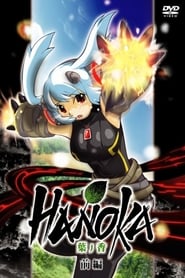
Hanoka is a 12-episode anime created by RAMS and Fanworks. Directed by Aruji Morino, it was broadcast in Japan on Kids Station between August 7, 2006 and October 23, 2006. It is the first TV anime series entirely created with Adobe Flash animation. The opening theme of the anime is "Dual Love on the planet ~Hanoka~" by Sakura Nogawa. On October 4, 2006, King Records released a maxi single for the anime's opening theme, "Dual Love on the planet ~Hanoka~". It was sung by Sakura Nogawa. The song was composed by Hironobu Kageyama.L'Île Kilucru
2022
L'Île Kilucru
2022
Frankenstein's Cat
2007
Frankenstein's Cat
2007
School Shock: Son of Eden
2020
star 6Ordinary high school student Haoxuan Sun was taken hostage in a seemingly robbery and rescued by a girl wearing winged battledress with bee bionics designs. Haoxuan Sun’s peaceful life was stirred by the girl – human bioengineering weapon Vanguard Liuli. Discovered that he is the "Son of Eden" wanted by all the great powers, Haoxuan Sun and Liuli have been searching for the truth and fight against the so-called destiny. At the same time, people around Haoxuan Sun, senpai Ye Bai who he has a crash on, his best friend, and many others, were discovered to have a second identities. The new BEE anime is based on the original manga plot. In addition, BEE manga's author Baimao personally joined the production team. The new BEE will also include two subplots entirely new to the viewers.The Lost World
2002
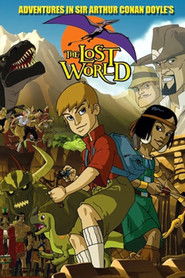
The Lost World
2002
star 7Billy's father disappeared. So they set out to find him with his mother, on a journey to the lost world full of adventure, strange animals and new friends.Gochizo Party
2025