Soap TV Series - Page 34

Força de um Desejo
1999
Força de um Desejo
1999
star 8.3Força de um Desejo is a Brazilian telenovela produced by Globo TV and was shown in the schedule of 18 hours between May 10, 1999 and January 29, 2000, in 226 chapters. It was written by Gilberto Braga and as collaborators with Alcides Nogueira Marques, Lilian Garcia, Eliane Garcia, Philip Miguez and Mark Silver and directed by Mauro Mendonça Filho, Carlos Araújo, Fabricio Mamberti and João Camargo, with production of the core Marcos Paulo. Featured Malu Mader, Fábio Assunção, Cláudia Abreu, Marcelo Serrado, Selton Mello, Nathália Timberg, Lavínia Vlasak, Isabel Fillardis and Denise Del Vecchio in leading roles.Rosa Salvaje
1987
Rosa Salvaje
1987
star 6.6Rosa salvaje is a Mexican telenovela that was broadcast in 1987. It starred the popular Mexican actress Verónica Castro, who played the main character, "Rosa", co-starring with Guillermo Capetillo as her love interest and Laura Zapata as the villain of the story. This telenovela was a huge success in Mexico, Latin America, Bulgaria, Croatia, Serbia, Bosnia and Herzegovina, Russia, Estonia, China the United States, Indonesia and provided the template for numerous other Latin American soap operas in terms of story, plot twists and characters for years to come.Fall Into Temptation
2017
Fall Into Temptation
2017
star 7.8Raquel and Damián are happily married with two children. Destiny leads Damián to meet Carolina and feels an undeniable attraction towards her. Damián did not know that Carolina was already married to Santiago Álvarado, a construction architect with whom she has two children. When Raquel drops off her son Fede at school, she accidentally backs her car to Santiago's truck, and they realize that their sons know each other. Raquel volunteers to pay for the damages but Santiago refuses. Raquel insists and goes to the Álvarado home with Damián. The two couples become great friends. But the desire between Damián and Carolina is stronger than their marriage commitment and both decide to deceive to their spouses. Damián and Carolina have a terrible car accident. Rescuers only find a seriously injured Damián, and Carolina has mysteriously disappeared from the scene. During the investigation by the police, Raquel and Santiago learn that their spouses are lovers.Direito de Amar
1987
Hasta que el dinero nos separe
2009
star 7.9Hasta Que el Dinero Nos Separe is a telenovela produced by Emilio Larrosa. It is a remake of the Colombian soap opera Hasta Que la Plata Nos Separe. Hasta Que el Dinero Nos Separe stars Itatí Cantoral, Pedro Fernández, Victor Noriega, Luz Elena González and Joana Benedek. The telenovela made its debut on June 29, 2009 at 8 pm in Mexico's Canal de las Estrellas, in HD in some markets, and January 18, 2010 at 8/7 pm USA's Univision, starting on April 26, 2010, it aired from 8 pm est to 10 pm est in HD in some markets, until June 1, 2010, when Soy Tu Dueña premiered on Univision at 9pm, thus returning the novela back to its former one hour airing time. On February 16, 2010 Hasta Que El dinero nos separe premiered on internet TV's bsn Latino. "The Best Telenovela of the Year 2010."Sinhá Moça
2006
Sinhá Moça
2006
star 6.7Monarchists and republicans meet in Araruna, a small fictional town in the interior of São Paulo, in 1886. The novel portrays the love story of the beautiful and wealthy Sinhá Moça - daughter of the slave, Barão Ferreira de Araruna, and sweet and submissive Mother Candida - , with the young abolitionist lawyer Dr. Rodolfo Fontes - son of Dr. Fontes, and the housewife Inêz. Together, they face the difficulties in the campaign for the abolition of slaves.Dance with Me
1981
Dance with Me
1981
star 6.2Quinzinho and João Victor are identical twins separated at birth, unaware of each other's existence. The brothers eventually draw closer, guided by their instincts.Cordel Encantado
2011
Cordel Encantado
2011
star 8Cordel Encantado is an epic telenovela encircled by castles, kings and outlaws that tells a majestic love story between Azucena and Jesuino: two noble spirited young people who are unaware of their true origins. Beautiful Azucena and her hero Jesuíno go through many adventures in their determination to stay together.Binbir Gece
2006
Cat's Cradle
2009
Cat's Cradle
2009
star 8.1Imagine a strong and tender hearted woman, a confused man and a villain capable of everything to get money. We have the perfect love triangle to a classic love story.Romané
2000
Romané
2000
star 6A caravan of gypsies arrives in Mejillones, Chile, to celebrate the marriage of their patriarch, without imagining that the unexpected arrival of his daughter after two decades, will revive a stormy past.Zazá
1997
Meu Bem Querer
1998
Meu Bem Querer
1998
star 6.5Meu Bem Querer is a Brazilian telenovela produced and aired by Rede Globo. Written by Ricardo Linhares, with the collaboration of Leonor Bassères, Nelson Nadotti, Maria Elisa Berredo and Glória Barretoentre, monitoring text by Aguinaldo Silva, direction of Luís Henrique Rios, João Camargo and Alexandre Avancini, direction general of Roberto Naar and nucleus of Marcos Paulo and transmitted by August 24, 1998 and January 20, 1999, totaling 179 episodes.Juegos de amor y poder
2025
star 7.3Luciana, a psychologist, is torn between love and loyalty. After being rescued from a robbery by prosecutor Roberto Roldán, they feel a strong connection. However, Roberto is investigating a hit-and-run involving Adrián Ferrer, whose father, Enrique Ferrer, is the presidential candidate and Luciana’s godfather. As Roberto gets closer to the truth, Enrique’s future is at risk. Luciana must choose between supporting Roberto in his quest for justice or protecting her family.La Mentira
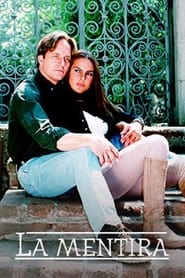
1998
Return to Las Sabinas
2024
star 7Gracia and Paloma return to Las Sabinas to look after their father, Emilio. Gracia reunites with her childhood sweetheart, Miguel, who is now engaged to Esther. Paloma takes over the family's land and clashes with landowner Paca Utrera, who shares a terrible secret with Emilio and has a nefarious plan for the village. Young Óscar is found dead under strange circumstances. Manuela must investigate the murder with the help of Óscar's brother, Álex, who is a priest.Kahiin to Hoga
2003
Kahiin to Hoga
2003
star 3.1Kahiin to Hoga is an Indian soap opera which aired on STAR Plus between September 2003 and February 2007. The show was created by Ekta Kapoor of Balaji Telefilms. The romantic-drama series was show was one of the famous television program during its airing period which helped Star Plus capitalize the television market in the 2004-2006 era. Kahiin to Hoga suffered huge loss when its lead Rajeev Khandelwal left the show in between.Golpe de suerte
2023
Golpe de suerte
2023
star 8.8"Golpe de Suerte" tells the lives of three families from different social classes. First there are the Pérez Flores, who live in Neza and are made up of Ignacio, Julia and their children Ronaldo and Wendy. The second family is made up of Miranda Ortiz and her little son Diego; They live in the Roma neighborhood in the house of César Traven, a generous elderly antiques dealer. And finally there are Brenda Uriarte, her brother Tony, her stepmother Constanza and her stepsister Sabrina, an upper middle class family. Each of these families will experience a radical change in their lives the day they win two hundred million pesos.Blood Ties
2010
Blood Ties
2010
star 5Laços de Sangue is a Portuguese telenovela which broadcast on SIC from September 2010 to October 2011. It is a co-production between SIC and Brazilian Rede Globo. The show also broadcast in several Latin American countries, including Uruguay, Brazil, Bolivia, Ecuador, Paraguay, Peru, Dominican Republic, Costa Rica, and Nicaragua. It won the 2011 Emmy for Best Telenovela.