Talk TV Series - Page 138

입 터지는 실험실
2025
입 터지는 실험실
2025
The Rotten Tomatoes Show
2009
Each episode features Ellen Fox and Brett Erlich reviewing two or three movies that are releasing that week in theaters. Originally, Ellen and Brett were backed by webcam reviews from viewers, comedians, professional critics, and independent filmmakers. This format changed during Season 2, when the webcam reviews were replaced by solely professional critics in front of a green screen at the show's actual studio.Feis tu feis
2016
Feis tu feis
2016
Al Murray: Why Does Everyone Hate the English?
2018
star 8Comedian Al Murray travels to some of England's nearest neighbours to explore some of their gripes with the English, with the help of a comedian from each nation he visits.Good Mythical MORE
2014
Good Mythical MORE
2014
star 5This the show after the show where things are a little more relaxed, but every bit as interesting as Good Mythical Morning. Tune in daily for even more taste tests, challenges, and games!Famille je vous aime
2025
Famille je vous aime
2025
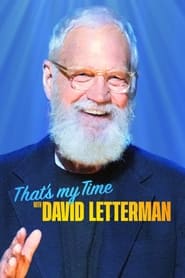
That’s My Time with David Letterman
2022
star 6.2David Letterman invites some of the hottest up-and-coming stand-up stars to perform a set and sit down for a chat.Inside Michigan Football
1975
Longtime Michigan broadcaster Jim Brandstatter breaks down the previous day's football action with post-game interviews with the players and coaches, along with special features on the University of Michigan. Michigan Replay was the broadcasts of weekly (in season) coach's shows for University of Michigan football and men's basketball. The football Michigan Replay Show went on the air in 1975 with twelve to sixteen programs per year. Larry Adderley was the host from 1975 to 1979. Jim Brandstatter took over starting in 1980. In 2008 the title was changed to Inside Michigan Football. The basketball coach's show was first broadcast in 1990 under the title Michigan Basketball Preview and became Michigan Replay in 1999/2000. The format of the half-hour show was a host and the head coach in a studio setting reviewing the previous weeks games and previewing the upcoming games. Typically there would be one or more guests and often a short topical story.Timeshift
1993
Undisputed
2016
Undisputed
2016
Sportswriter-turned-TV personality Skip Bayless knows a thing or two about sports debates after participating in them for more than a decade at a competing network's morning show. Now at FS1, he gets top billing on "Skip and Shannon: Undisputed," a daily show that sees Bayless offering his hot takes on the latest sports news opposite Pro Football Hall of Fame inductee Shannon Sharpe, who expands his horizons beyond just pigskin. Jenny Taft moderates and must keep things under control when the debates get heated.Πρωινός Καφές
1991
Πρωινός Καφές
1991
star 3Proinos Kafes was a television daytime show aired by ANT1 in Greece during the period 1991-2009. Though it has received low ratings in the past years, it was one of the longest running and well known shows in Greece. The show consisted of different segments which included fashion shows, game and prizes, interviews, and live music from Greek and foreign artists. 'Proinos Kafes previous hosts': 1991-1994: Roula Koromila, 1994-1995: Popi Chadzidimitriou, 1995-2005: Eleni Menegaki, 2005-2008: Eleonora Meleti 2008-2009 Katerina Zarifi and Nikos Moutsinas 2009 George Lianos and Despoina Kabouri, 2009- Vicky Kaya Since the start of the show in 1991, the show has toured different parts of Greece including different areas of Athens, Heraklio on the island of Crete, Patras, Thessaloniki and many other places in Greece. The theme song of Proinos Kafes, was "Kalimera" - a song originally sung by Alexia Vassiliou, also known as, Alexia, in her 1990 album, 'Ela Mia Nyxta'.Big Noon Kickoff
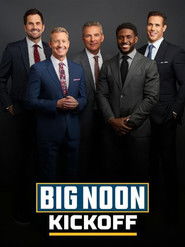
2019
Big Noon Kickoff
2019
A two-hour show held on the campus of one of biggest college football showdowns of the week. Analysts including former players break down the teams and key factors to the game.#NoFilter
2023
#NoFilter
2023
star 6.8Marcely no longer feels like studying and quits to focus on a new goal: becoming an influencer. But life online is harder than it looks.Sin parche
2019
Sin parche
2019
Santiago Pavlovic interviews important national public figures, while living with each interviewee during a brief period of time, learning about unknown aspects of their lives.Nani o Kakusō... Sorega!
2024
Anecdotes about the greats, the world of entertainment, and objects will be shared by selected storytellers from various fields. This is a new variety show where you can gain knowledge and education from these anecdotes!Vic Reeves Examines
2000
Vic Reeves Examines
2000
star 5A bizarre mix of chat show and performance art, as comedy star Vic Reeves allowed guests a rare opportunity to delve into his mind and examine the contents... Guests were invited to talk about obscure subjects like ‘cutlery’ and in the process analyze Vic’s original art work, study relevant props and artifacts, and spend time with the studio rabbit. Guests included Johnny Vegas, Ricky Gervais and, Bill Oddie.FishCenter Live
2014
FishCenter Live
2014
Four Adult Swim employees turn their office fish tank into a fierce competition for glory.