Talkshow TV Series - Page 114

1周回って知らない話
2014
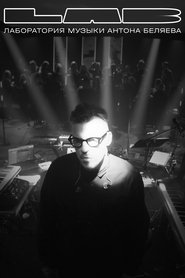
LAB with Anton Belyaev
2019
star 10A music laboratory where famous artists communicate about their work, perform their compositions in unusual arrangements, and record completely unexpected versions of other musicians' hits.Luciana By Night
2012
I'm A Celebrity... Unpacked (South Africa)
2026
I'm A Celebrity... Unpacked is your place to get MORE of your favourite show! We're deep diving into the dynamics around the campfire and bringing you opinions hotter than the southern-hemi sun! Join Sam Thompson and Kemi Rodgers after I'm A Celebrity... South Africa every night for the juiciest debrief of an unmissable series!Ottis Aquarium
2014
Ottis Aquarium
2014
마시는 녀석들
2021
마시는 녀석들
2021
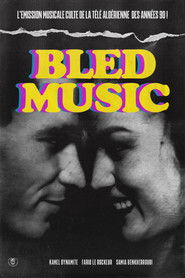
Bled Music
1991
Bled Music
1991
star 10"Bled Music" is an Algerian musical television program broadcast on ENTV between 1991 and 1992. directed by Aziz Smati and presented by Kamel Dynamite, Farid Rockeur and Samia Benkherroubi. The show, with its irreverent tone, was very popular and had a significant impact on the Algerian music scene, allowing the emergence of many artists including Chaba Fadela, Cheb Sahraoui, Cheb Anouar and Mohamed Lamine. A ranking of music videos by popularity and relied on fans sending their votes by mail. At the end of the 1980s, unrest broke out in Algeria which led the country into a Black Decade. At this time, fundamentalist groups attempted to ban music and most other forms of artistic expression. The show continued to air despite death threats, but on February 14, 1994, Aziz Smati was shot in both legs by a young extremist, which ultimately led to the end of the show .Literaturclub
2004
Literaturclub
2004
Face to Grace
2018
Face to Grace
2018
Zaga
1998
Hot Door Night
2013
Hot Door Night
2013
star 1The most famous actors, the greatest performers, and the most popular figures in the entertainment business walk through a door on stage—the “Hot Door”. Viewers hold their breath as they wait to see who would be walking through the door each night. On this stage the audience can see the artists’ different sides. Every night, the most popular figures in the entertainment business incorporate the hottest topics and current events into a spectacular variety show. The five hosts, Jacky Wu, O.D., Hank Chen, ADA and LuLu, who are different in age, generation, and hosting style, not only can sing, act, dance, and imitate, but are also skilled in cross-talk.Stjerner på stribe
2013
Stjerner på stribe
2013
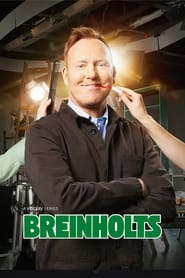
Breinholts
2024
Breinholts
2024
Don’t be Jealous
2020
Don’t be Jealous
2020
It’s no secret that it’s extremely difficult for celebrities to openly be in a relationship in Korea. “Don’t Be Jealous” looks to normalize this current taboo by talking about what life is like while dating under the limelight. These are the real love stories of Ji Sook (Rainbow), Chef Lee Won II, actress Choi Song Hyun and Woo Hye Rim (Wonder Girls) - their private dating lives ready to be laid out. You can laugh and empathize with their honest love, their daily lives, and even their deepest thoughts! Hosted by Jang Sung Kyu, Jang Do Yeon, Heo Jae, Ravi (VIXX), and Jeon So Mi, you’ll surely be laughing as they narrate each relationship.