War Politics TV Series - Page 111

The Last Cyclist
2014
The Last Cyclist
2014
star 2.7A Christian orphan raised in a Jewish family has to face the cruel fate of Auschwitz during World War II.Lost Home Movies of Nazi Germany
2019
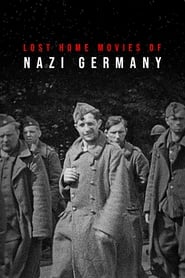
star 7.5A candid look at what life was really like for those living in, and under Hitler's Swastika - at home - and abroad, a record not only of what they saw, but of what they knew.Secrets of World War II
1998
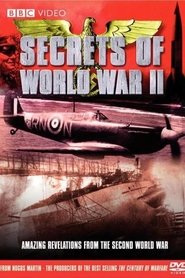
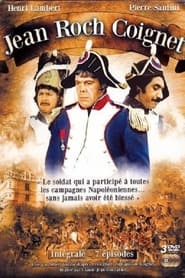
star 8Rarely has a war produced such clear cut reasons to fight as World War II. Suddenly, ordinary men and women found themselves thrown into fearsome, situations worthy of any Hollywood movie. The only difference in this series is that every story is true. Real people emerge as the Heroes of Telemark. Ordinary GIs and US Airforce and Navy personnel suddenly find themselves flying against the Japanese in China, jungle fighting in Burma and being dropped by submarine on enemy coasts at midnight. These untold stories can now be examined in great detail with the benefit of hindsight, newly-discovered film, maps and graphics. Each fifty-two minute story covers the background to the main action. It will give the viewer a clear view of the historical context, the strategic objective and the tactical effort made by flyers, sailors and foot-soldiers - often in the most oppressive and life-threatening situations - to win victory from the enemy.Jean-Roch Coignet
1969
Jean-Roch Coignet
1969
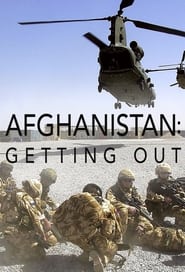
Afghanistan: Getting Out
2022
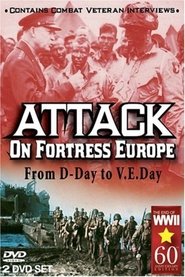
star 8.7Finding a way to end a war. Insiders tell the long and troubled story of a chaotic conflict, revealing the political pressures that helped seal the fate of Afghanistan.Attack on Fortress Europe: From D-Day to V.E. Day
2003
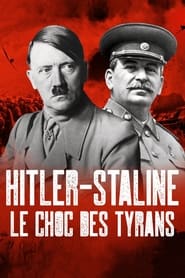
Hitler had proclaimed that Nazi conquered Europe was an impenetrable fortress. On the 6th of June 1944, the Allies launched the largest combined land, air and sea operation ever. This invasion, designed to begin the liberation of Europe, would forever be known as D-Day. The years leading up to 1944 had seen total domination of Europe by Nazi Germany. Despite the entry of America into WWII, strategic bombing, the invasions of North Africa and Italy, Germany remained in control and was able to strength its coastal defenses, The Atlantic Wall, in preparation for the inevitable Allied invasion. Operation Overlord was the Allied plan to defeat those defenses and open a Western Front. The hard lessons learned at Anzio, Dieppe and Salerno were about to be brought into focus with the greatest invasion the world had ever seen. But how had the Allies come to this point? Who were the personalities and what compromises were made to forge this great alliance?Hitler Staline, le choc des tyrans
2021
star 9.3On 23 August 1939, the world was shocked to discover that Hitler and Stalin, the most intractable of their enemies at the time, had signed a pact that allowed them to divide Poland between them and gave the Nazi leader complete freedom to concentrate his forces in the West, against France and the United Kingdom. Through this agreement, Europe was to be thrown into war. For a long time, the relationship between Hitler and Stalin was ignored: their mutual fascination, their moves to get closer, the marks of confidence they exchanged and all the benefits they derived from the German-Soviet pact, before resuming their war to the death in June 41 with the "Barbarossa" operation.The Second World War in Colour
1999
star 6.4The Second World War In Colour [1999] is a three-part documentary which reveals hours of previously unseen colour film of World War II. As almost all newsreel film was shot in black and white, this DVD offers a completely new portrait of the war. Dramatic colour footage from as early as 1933 shows home movies of Adolf Hitler and his cohorts, the devastation wrought by the Blitzkrieg, life on the home front, D-Day and the Allied invasion of France, British bombers defying German fighters, the horror of the Holocaust that troops met as they entered Germany, and the jubilation of the final Allied victory. With John Thaw's narration intercut with spoken accounts from the letters and diaries of those who fought, those who survived, and those the war claimed as victims, this documentary is an extraordinary remembrance of a monumental time in world history.Последний бой
2018
Последний бой
2018
Cseppben az élet
2019
Living Next Door to Putin
2023
star 7Katya Adler explores how life is changing for people living on Russia’s border and the consequences of Putin’s war on the west.Sicília sense morts
2022
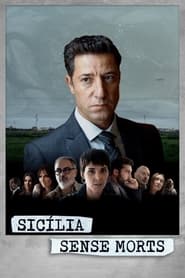
Sicília sense morts
2022
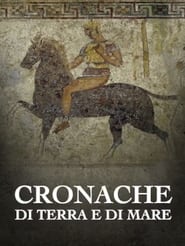
Chronicles of Earth and Sea
2023
Six episodes focused on places fundamental to telling the story of ItalyMunich '72
2022
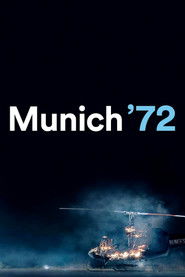
Munich '72
2022
star 6Chronicle of the attack perpetrated by the Palestinian terrorist group Black September in the Olympic Village during the 1972 Munich Summer Games.Battlefield Recovery
2016
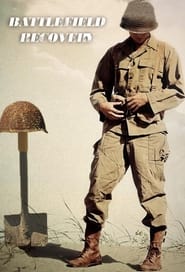
Battlefield Recovery
2016
star 6WWII history series following a four-man team as they explore the war zones of the Eastern Front in an effort to excavate and preserve the forgotten battle relics, at the same time discovering the stories of fallen soldiers from their remains.Le 16 à Kerbriant
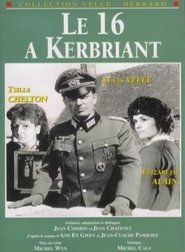
1972
Le 16 à Kerbriant
1972