War Politics TV Series - Page 36

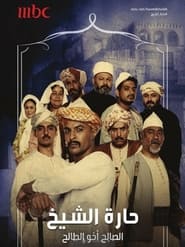
Harat Alsheikh
2016
Harat Alsheikh
2016
A folk tale in old Jeddah about two brothers, one went astray and followed a gang, the other followed the righteous path doing good deeds.绝对权力
2003
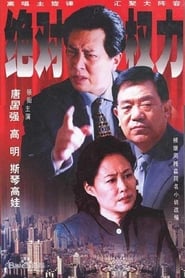
绝对权力
2003
Hojo Tokimune
2001
Hojo Tokimune
2001
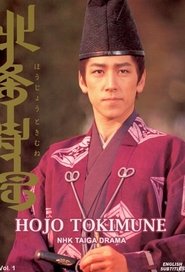
The 40th NHK Taiga Drama is Hojo Tokimune. It tells the dramatic and turbulent life of young shikken Hojo Tokimune, and his successful defense of Japan from invasion by Mongolia in the 1200's. It is a tragic story of betrayal and clan wars and Hojo Tokimune is at the center of it all. The main focus of the story is Hojo Tokiyori's older sons, their relationship, and their views and actions concerning Kublai Khan's attempted invasion. The two brothers, Tokimune and Tokisuke, are torn apart by politics.Heroes II: The Return
1991
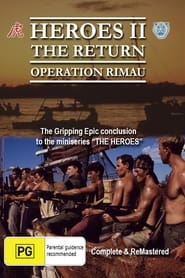
star 8Heroes II: the Return is a 1991 Australian mini-series about Operation Rimau during World War II. The true and tragic story of Operation Rimau, one of the most daring raids of WW2. In September 1944 Ivan Lyon and 22 Australian and British troops attempted to blow up Japanese ships in Singapore. Just 10 miles away from the target they are discovered and so begin a long and desperate bid to escape to Australia. The series shows how after the war it is revealled that 13 men were killed during the pursuit and that the remaining 10 were murdered by the Japanese in a war crime. Tragically this was covered up and their killers were never charged while the men themselves never received any honours for their heroism.ANZAC Girls
2014
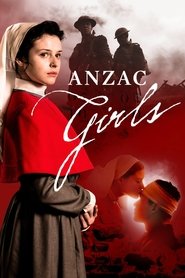
ANZAC Girls
2014
star 7.1The unique, and rarely told true stories of Australian and New Zealand nurses serving at Gallipoli and the Western Front during the First World War.Ain't Misbehavin'
1997
Ain't Misbehavin'
1997
star 7Comedy drama set during World War Two following the misadventures of two very different bandsmen - one an ex-air force pilot, the other a draft dodging, scheming private detective - as they get caught up with gangsters and romance in blitz torn London.The Final Cut
1995
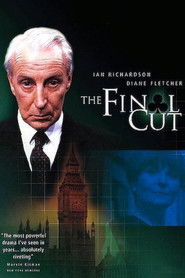
The Final Cut
1995
star 7.6Seasoned politician Francis Urquhart tries to establish his legacy before retirement by negotiating an end to the Cyprus, but the island hides secrets from his past that could destroy him.The Optimists
2017
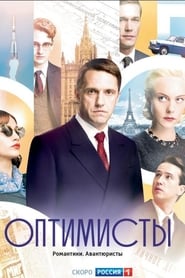
The Optimists
2017
star 5.2The early 1960s. The Soviet Union is experiencing a bright Khrushchev-era, full of hope. A group of young diplomats at the Ministry of Foreign Affairs come face to face with world-changing global events. Before long, these wide-eyed idealists find themselves deep in the breathtaking world of spy games, mortal dangers, and brilliant political maneuvering.Lincoln
1988
Lincoln
1988
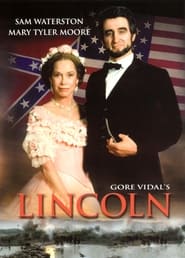
star 7.3The life of Abraham Lincoln, from his election as President of the United States to the time of his assassination. Based on Gore Vidal's historical novel.Spin
2012
Spin
2012
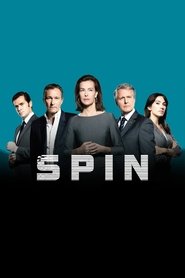
star 6.4The President of the French Republic, visiting Saint-Etienne in the Loire, in a striking plant dies, victim of a bomb attack. The political world is agitated: early presidential elections to be held within the next thirty-five days. There is no doubt that Philip Deleuvre, the prime minister, will run for the Elysee. But what few people know is that the leader of the government knows more things he claimed. This state causes lie back to business Kapita Simon, a former communications adviser (spin doctor) of the late president. Anxious to preserve the honor of his deceased friend and some form of political ethics, the man of the shadows has now set a goal: to find a candidate who will be able to beat Deleuvre.I Am Zhao Chuanqi
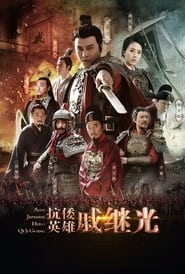
2015
I Am Zhao Chuanqi
2015
Soldiers of Freedom
1977
Soldiers of Freedom
1977
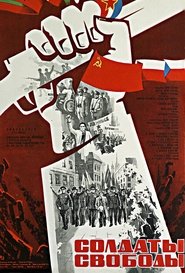
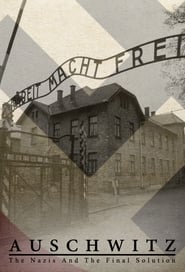
star 4.1The action of the epic film takes place in the second half of World War II. The plot focuses on the liberation of European countries from German occupation and the anti-fascist activities of the communist parties of these countries. After the victory at Stalingrad, a decisive turn occurred during the war. The main aim is the rallying of all patriotic forces, the creation of a national anti-fascist front in the struggling countries. The swift offensive of the Soviet troops, problems with the opening of a second front, major operations and the offensive of the Soviet army lead to the liberation of Europe. Rebellions are rising in different countries - such as the heroic uprising in Warsaw, in Slovenia, Bucharest and other cities. Brave heroes who performed immortal feats in the name of the happiness of mankind and freedom.Auschwitz: The Nazis and the Final Solution
2005
star 7.5This documentary series tackles one of history's most horrifying subjects: the Holocaust and the infamous Auschwitz-Birkenau concentration camp.Queen Insoo
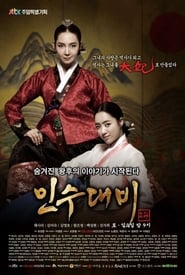
2011
Queen Insoo
2011
star 2.4Queen Insoo focuses on the fierce power struggle among three women in the royal court of the Joseon Dynasty.Life and Fate
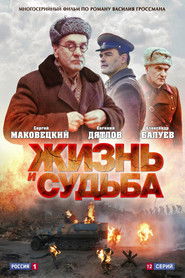
2012
Life and Fate
2012
star 8.6The plot takes place in 1942-1943, during the defense of Stalingrad. The Jew Viktor Strum is a talented nuclear physicist working in one of the country's institutes on the creation of an atomic bomb. At this time, Strum's relatives die in Nazi camps and NKVD dungeons, and persecution begins against him. The inventor can only be saved by his scientific brainchild, which Stalin himself became interested in. The state needs such a powerful weapon as an atomic bomb. The scientist has to make a choice: to remain faithful to science and work for the "leader of the nation" or to abandon his vocation and be destroyed.Whiskey on the Rocks
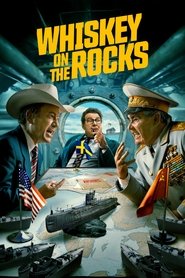
2024
Whiskey on the Rocks
2024
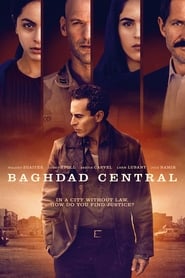
star 6.5In the middle of the Cold War, a Soviet submarine runs aground outside Karlskrona and suddenly Sweden finds itself at the center of events. Prime Minister Thorbjörn Fälldin tries to resolve the conflict and avoid a world war between two nuclear powers while struggling with a wise foreign minister and a belligerent commander-in-chief.Baghdad Central
2020
Baghdad Central
2020
star 6.6Shortly after the fall of Saddam Hussein, Iraqi ex-policeman Muhsin al-Khafaji has lost everything and is battling daily to keep himself and his sick daughter, Mrouj safe. But when he learns that his estranged elder daughter Sawsan is missing Khafaji is forced into a desperate search to find her.And Quiet Flows the Don
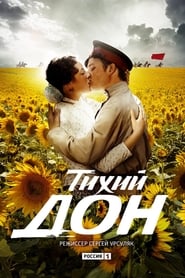
2015
star 4.8The action begins in 1912. The heroes of the painting - neighbors, villagers, Cossacks from the Tatarsky farm of the village of Vyoshenskaya - have lived on this land for centuries, they are connected by kinship, friendship, love, common labor and military service. But this durable and self-sufficient world with its unique way of life, habits and a special system of views and values is collapsing under the onslaught of bloody turmoil and revolution. Don is divided by hatred. The seemingly immutable age-old foundations of Don life - land, farm, family, military duty - are dissolving in the crucible of fratricidal war. The Melekhov, Korshunov, and Astakhov families are involved in the cycle of military and political events.Burnt by the Sun 2
2011
Burnt by the Sun 2
2011
star 1Former commander Kotov, unjustly convicted in the 30s as an enemy of the people, miraculously survived and was sent to war by an ordinary ordinary soldier of the penal battalion. He fought like everyone else: in mud, cold and hunger, without looking into the future for more than one day, and even that he had to be able to live. To live and survive in the hell that was the military front line. His faith saved him. Faith in his country, faith in God and the faith of his daughter Nadia that the father is alive…