War Politics TV Series - Page 53

My Love Hit the War
2016
My Love Hit the War
2016
During the 1937 Second Sino-Japanese War, Fang Yuan seeks revenge for his family’s death and joins the resistance, forming an alliance with Dr. Chen Ruge, whom he initially suspects of being a traitor. As they fight together, their bond deepens, and despite misunderstandings, they reunite after China’s victory in the war.Chief of Intelligence
2022
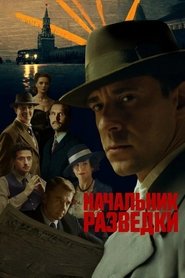
star 8.7The story of the formation of Soviet intelligence, told through the prism of the fate of its youngest chief - 31-year-old Pavel Mikhailovich Fitin.The Legend of Zheng Cheng Gong
2014
In 1624, the Dutch invaded and occupied Taiwan, oppressing the natives, villagers and traders by attacking, conquering and taxing them. This invasion of China ’ s territory alarmed the Ming Emperor on the Mainland. He called for a contest to find a brave military leader to fight the invaders. One young contestant, Zheng Chenggong, stood out from the rest and was made General. With the help of the Princess, he won over both lieutenants of the notorious pirate Tyrant Bear, and instigated them to turn against their master.Traitor
2022
Traitor
2022
star 6.8After a flight from Tel Aviv to Bangkok vanishes in mid-air, with no signs of an explosion, crash or hijacking, the entire world is left mesmerised. Yonatan Georgy is a recently blind intelligence officer returning to work, tasked with investigating the plane's disappearance - with his wife and children on board. At the same time, families of the passengers start realising they didn't know their loved ones as well as they thought.D-Day to Berlin
2005
D-Day to Berlin
2005
star 7.23-part BBC Miniseries depicting the Allied progress from the D-Day landings in Normandy all the way to Berlin. The Normandy breakout is covered, as well as the Battle of the Bulge and Operation Market Garden, to the eventual objective of Berlin. The Series is narrated by Actor Sean Bean.Doomsday: World War I
2012
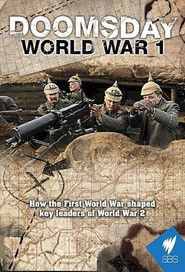
star 7.3The First World War - carnage on a scale never-before seen. But how did it all start? And how did some key figures of WWII fare in the earlier war?Xia Tan Gao Fei
2014
Xia Tan Gao Fei
2014
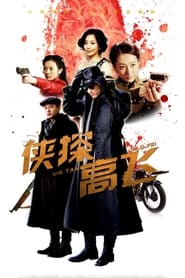
After Japan announced its unconditional surrender in 1945, news spread that a batch of Japanese arms had been hidden in Longcheng. The Communist Party, the Kuomintang, and local warlords launched a desperate struggle for this. Gao Fei was ordered to go to Longcheng to search for clues for his dead brother. He led Jin Xiaoban, He Min and others, with the help of the Communist Party, together with Shen Bing sent by the Kuomintang, Lu Dingjun, a local warlord who dominated one side, and the Japanese squad who were unwilling to surrender.Agent Black Fox 2
2015
Agent Black Fox 2
2015
SWARM
2026
Akif
2023
Akif
2023
star 7Amidst the ravages of WWI and the conflicts within the country, Akif tries to keep his family together and encourages the youth to unite against the enemy. With his pen mightier than the sword, he writes the National Anthem of the new Türkiye.Morpekhi
2011
Morpekhi
2011
Vidago Palace
2017
Vidago Palace
2017
star 2.8Vidago Palace has the background of the year 1936 and tells us a love story between two young people from different classes, ready to face all obstacles.密战峨眉
2012
密战峨眉
2012
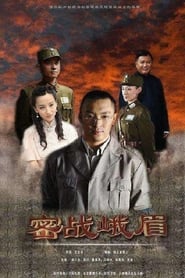
During the war against Japan, a Communist agent infiltrates Japanese spies to protect national treasures hidden in Mount Emei, facing dangerous missions and personal sacrifices, as love and tragedy unfold amid the fight to safeguard China’s heritage.Kalbimin Sultani
2018
Kalbimin Sultani
2018
star 8.1Mahmud brings Anna to his palace to teach his children French. The Russian ambassador also sends him there with the pressure to 'spy on his country'.八女投江
2015
八女投江
2015
Attack on Pearl Harbor: Minute by Minute
2021
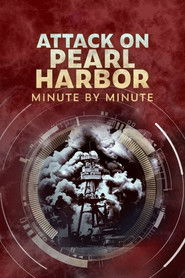
star 6.8Covers the 1941 Japanese military strike on a Hawaiian naval base in never before seen detail.Scent of Rain in the Balkans
2010
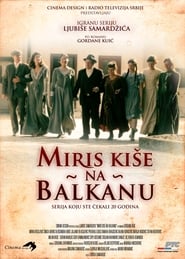
Trials and tribulations of a Jewish family from Sarajevo during turbulent times between 1914 and 1945.Assignments of Special Importance
2013
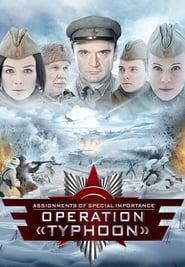
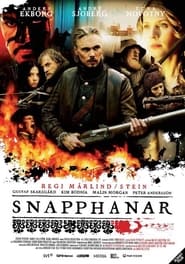
star 1A group of Soviet spies performs missions of special importance during World War II.Snapphanar
2006
Snapphanar
2006
star 5.7Snapphanar is a Swedish miniseries which aired in three parts on Sveriges Television during Christmas 2006, directed by Måns Mårlind and Björn Stein. The historical drama is about the Snapphane peasant rebel movement which fought against the Swedish rule of Scania in the 17th century. The "Snapphanar" was a rebellion people, who fought secretly for Denmark during 1660-1700. The miniseries were criticised by historians due to a perceived lack of historical accuracy. The Scanian nationalist attitudes portrayed in the series did not exist in the 17th century, and the term snapphane, which is used for self-identification in the series, was in fact a derogatory term used by Swedes.