War Politics TV Series - Page 58

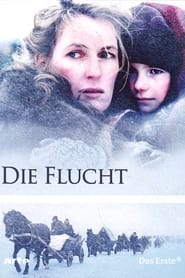
March of Millions
2007
March of Millions
2007
star 4.8In 1944 many Germans in Eastern Prussia believed like Lena von Mahlenberg, daughter of a local aristocrat, that Hitler would surrender and spare them from being invaded by the vengeful Russian Red Army. He didn't and they had to flee.Guns Germs & Steel
2005
Guns Germs & Steel
2005
star 6.4A PBS documentary concerning Jared Diamond's theory on why there is such disparity between those who have advanced technology and those who still live primitively. He argues it is due to the acquisition of guns and steel and the changes brought about by germs.FutureWeapons
2006
FutureWeapons
2006
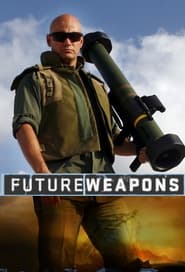
star 7Future Weapons, sometimes also written as FutureWeapons and Futureweapons, is a television series that premiered on April 19, 2006 on the Discovery Channel. Host Richard "Mack" Machowicz, a former Navy SEAL, reviews and demonstrates the latest modern weaponry and military technology. The program is currently broadcast on the Discovery Channel and Military Channel.Attempted Murder
2018
Attempted Murder
2018
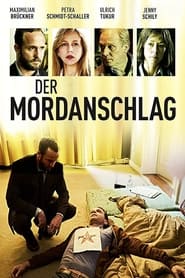
star 7In 1990 the head of the Treuhand, Hans-Georg Dahlmann, was targeted by the RAF. When he made Sandra Wellmann, mother of one son, his assistant, he had no idea what additional danger he was exposing himself to. Because Wellmann is doing common cause with RAF members Bettina Pohlmann and Klaus Gelfert and is supposed to provide them with information for the planned attack on Dahlmann.Misteri Gunung Merapi
1998
star 10Misteri Gunung Merapi (Mystery of Mount Merapi) is an Indonesian historical-drama TV series, produced by Genta Buana Pitaloka (now Genta Buana Paramita). It was first aired on Indosiar in February 7, 1999.上将许世友
2006
上将许世友
2006
Call Fire for Ourselves
1965
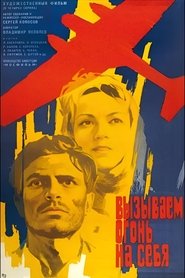
star 7In the Soviet airbase, occupied by the Nazis, a resistance group occurs, led by a modest girl Anna Morozova. For each victory (important, albeit small on a scale of the war) they have to pay a heavy price.Arab swords
2025
Arab swords
2025
The series takes place between the era of Jahiliyya and the beginning of the Umayyad caliphate, and presents the history of the Arab sword by documenting the most important stations that Arabs went through throughout the ages.The Red Chapel
1972
The Red Chapel
1972
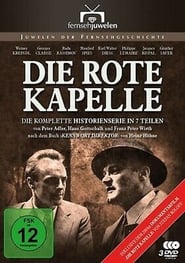
Shortly before the outbreak of World War II: Leopold Trepper, a colonel in the Red Army, travels to Belgium under a false name and sets up a spy ring there. Together with his employees Viktor Sukulow-Gurewitsch, Johann Wenzel, Hillel Katz and Michail Makarow, he succeeds in establishing a spy network throughout Belgium and France in a very short time. With the help of his cover companies - a chain of raincoat shops and later the import-export company Simexco ”- Trepper can collect information from the economy and the Wehrmacht, about Atlantic Wall construction sites and railway lines, and send it to Moscow. The agents also get help from patriots who want to free their countries from the occupation by the Germans.雄兵连之诸天降临
0000
雄兵连之诸天降临
0000
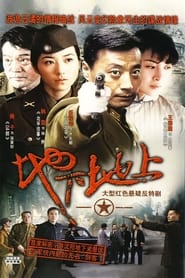
地下地上
2009
The True Believers
1988
The True Believers
1988
The True Believers is a 1988 Australian mini series which looks at the history of the Australian Labor Party from the end of World War Two up to the Australian Labor Party split of 1955. It was co-written by Bob Ellis who focused on three characters "Chifley, the unlettered man of great dignity; Menzies, who used to stand for something but eventually stood only for Menzies; and Evatt, the grand idealist... It's almost like Shakespeare's Henry IV, Part 1. It's a chunk of national history during Australia's great era of change after the war."Xia Tan Gao Fei
2014
Xia Tan Gao Fei
2014
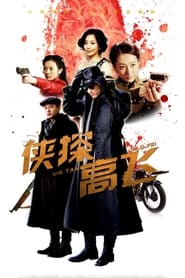
After Japan announced its unconditional surrender in 1945, news spread that a batch of Japanese arms had been hidden in Longcheng. The Communist Party, the Kuomintang, and local warlords launched a desperate struggle for this. Gao Fei was ordered to go to Longcheng to search for clues for his dead brother. He led Jin Xiaoban, He Min and others, with the help of the Communist Party, together with Shen Bing sent by the Kuomintang, Lu Dingjun, a local warlord who dominated one side, and the Japanese squad who were unwilling to surrender.猜拳
2015
猜拳
2015
Офицеры
2006
Rakshak India's Braves
2024
star 10A saga based on real-life events of the patriots who dedicated their lives to protect India. It is a testimony to the courage, commitment, and the spirit of every Rakshak towards their country and its citizens.The Righteous
2010
The Righteous
2010
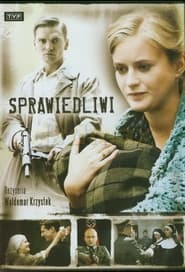
Basia and Stefan are a young married couple during World War II who risk their lives to bring aid to Jews. He is an architect, she a nurse--a member of "Zegota" (the Polish underground organization to aid Jews in occupied Poland which operated under the auspices of the Polish government in exile). The series takes place both during the war and in the present day. Basia and Stefan meet accidentally, fall in love, and marry. Basia is active with the underground from the beginning of the war; Stefan is not, but a family tragedy changes his attitude.Gulag, the Story
2020
Gulag, the Story
2020
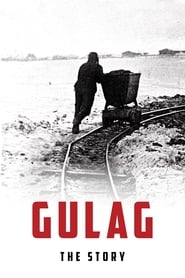
star 8.2A major political, historical, human and economic fact of the 20th century, the Gulag, the extremely punitive Soviet concentration camp system, remains largely unknown.The Leader
2019
The Leader
2019
star 7.2The life of German thinker Karl Marx, focusing on his political and economic theories, his romance with Jenny von Westphalen, and his friendship with Friedrich Engels.Flat Hill
2013
Flat Hill
2013
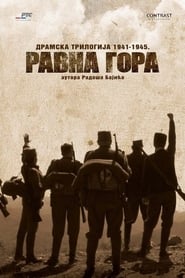
star 6.3Ravna Gora tells story of events after April War 1941. Serbia with accent on the Chetnic-Partisan conflict, at the beginning of World War II