War Politics TV Series - Page 81

Victory at Sea
1952
Victory at Sea
1952
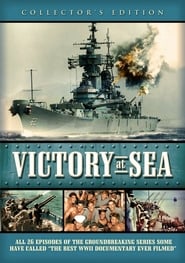
star 6.5Victory at Sea is a documentary television series about naval warfare during World War II that was originally broadcast by NBC in the USA in 1952–1953. It was condensed into a film in 1954. Excerpts from the music soundtrack, by Richard Rodgers and Robert Russell Bennett, were re-recorded and sold as record albums. The original TV broadcasts comprised 26 half-hour segments—Sunday afternoons at 3pm in most markets—starting October 26, 1952 and ending May 3, 1953. The series, which won an Emmy award in 1954 as "best public affairs program", played an important part in establishing historic "compilation" documentaries as a viable television genre. Over 13,000 hours of footage gathered from US, British, German and Japanese navies during World War II were perused in the making of these compelling episodes.Eye of the Desert
2024
Eye of the Desert
2024
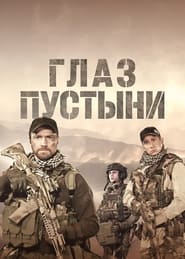
star 9.5Intelligence legend Major Maxim Shekhovtsov arrives in Syria to find the dead gunner Alexander. Taking with him a young sniper from the special forces, he goes deep into enemy territory. On a dangerous journey, they will face not only terrorist ambushes and fierce battles, but also personal irreconcilable differences.Land of Blood and Wisdom
2024
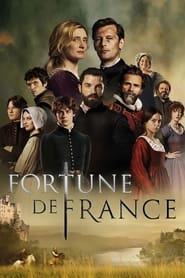
star 6.81557, The Wars of Religion threaten France. Behind the ramparts of the castle of Mespech, surrounded by a dangerous, hostile and intolerant world, the Siorac family fights for its survival and its convictions.Mameli - The Boy Who Dreamed of Italy
2024
star 7Between loves and ideals, the story of the last two years of the life of Goffredo Mameli, a young Genoese student who wrote the song that would become the national anthem of the Italian RepublicWWII in the Pacific
2015
WWII in the Pacific
2015
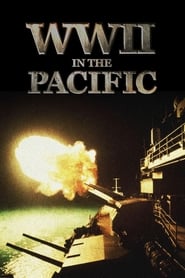
star 6WWII in the Pacific focuses on the events, notable figures, various bands of brothers, and heroic actions of the Allied powers. Take an inside look, starting with the conflict and tensions leading up to the war, the attack on Pearl Harbor, the evolution of the Pacific Theater, and the development and dropping of the atomic bomb, up until the subsequent end of WWII.Kill List: Hunted by Putin's Spies
2025
In this immersive, gripping documentary, journalist Christo Grozev - famous for exposing Putin's murder machinery - discovers that he's under threat and goes on the run.Manto Mavrogenous
1983
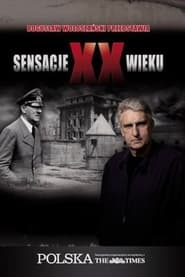
Sensacje XX wieku
1983
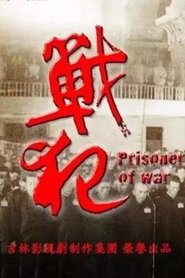
戰犯
2018
戰犯
2018
The Adventures of the Good Soldier Schwejk
1972
star 7.2Die Abenteuer des braven Soldaten Schwejk is an Austrian television series. Schwejk is a bumbling fool (he claims to have been discharged from the army on the grounds of being a certified idiot) but manages to outwit his superiors and his arch nemesis, the secret policeman "Bretschneider" with hilarious results. Set during the first world war, it follow Schwejks adventures as a recruit in the Austro-Hungarian army.Dur Yolcu
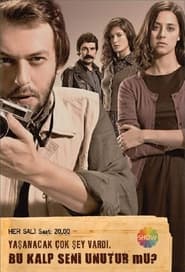
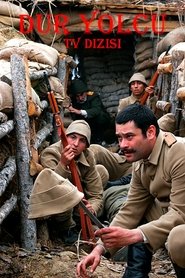
2008
Dur Yolcu
2008
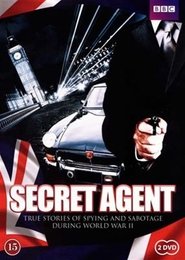
Secret Agent
2001
Secret Agent
2001
Documentary series recounting the exploits of the Special Operations Executive in World War Two.Kuang Biao Zhi Dui
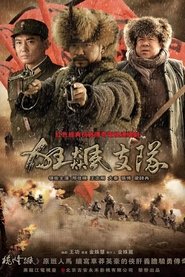
2012
Kuang Biao Zhi Dui
2012
The Long, Long Holiday
2015
star 8.7In September 1939, Colette and Ernest are welcomed by their maternal grandparents in a fictional village named Grangeville, near Dieppe in Normandy. The short vacation becomes semi-permanent when their father goes off to fight, following the mobilization of France to fight the invading German Army, and the poor health of their mother, required to leave to be treated for tuberculosis in a sanatorium in Switzerland. The two little Parisians discover life in the countryside during wartime, including occupation, Resistance, deprivation, but also life with friends.Ayrılık
2009
Ayrılık
2009
Ayrılık: Aşkta ve Savaşta Filistin, known in English as Farewell, is a prime time Turkish television series aired on state broadcaster TRT. The series started on 13 October 2009. The concept consultant of the series is columnist Hakan Albayrak in daily Yeni Şafak who had also been on the board of MV Mavi Marmara during the Gaza flotilla raid, while its script consultant is the trade union leader Yaşar Seyman who is a columnist of the left-wing daily BirGün.Kairākau
2016
Gedimino 11
2001
Gedimino 11
2001