War Politics TV Series - Page 84

Savcı
1992
Savcı
1992
Albasheer Show
2014
Albasheer Show
2014
Albasheer Show is an Iraqi political satire television program hosted by comedian and journalist Ahmed Albasheer. The show first premiered in 2014 and has been broadcast on various platforms, including YouTube and satellite channels like DW Arabia. It is known for its sharp and humorous take on political and social issues in Iraq and the broader Arab world, focusing on topics such as corruption, sectarianism, and governmental inefficiency. The show combines comedic monologues, satirical news reports, and sketch comedy to deliver its message. Its bold and unfiltered style has garnered a large following, particularly among young viewers in Iraq and the Middle East.Blisko, coraz bliżej
1983
Blisko, coraz bliżej
1983
star 8The story stretches from 1863 to 1945. Its main characters are representatives of the Pasternik family, who live in the fictional village of Wielowice near Pszczyna. The protagonist of the first three episodes is Franciszek Pasternik, the following parts tell about the fate of his many children and even more grandchildren. The viewer follows their history against the backdrop of great changes and historical events that influenced the lives of Silesian Poles. So there is the Kulturkampf, Prussian rugi, the revolution of 1905, World War I and the Silesian Uprisings.Post Factum
2019
The Color of War
2001
Die Bertinis
1988
Die Bertinis
1988
The story of the life and survival of a half-Jewish family in Germany from 1882 to 1945. The focus is on the family of the failed pianist and conductor Alf Bertini and his Jewish wife Lea Lehmberg. They live in poor conditions in Hamburg and fight to give their children a better life until Hitler seizes power.De Oorlog
2009
De Oorlog
2009
Charmed
2024
Charmed
2024
star 7When the German invaders come to the Don, the hero of the First World War, Semyon Neupokoev, gathers the Cossack hundred and stands up for the defense of his native land. The experience of fighting the Germans in 1914-1918, for which the fearless and savvy warrior was nicknamed the Charmed One, helps his hundred defeat German units in 1942, although the Germans now have tanks and cannons, and the Cossack still has the same saber, horse, and steppe all around. To break the resistance of the Conspirator and his loyal fighters, the enemy throws superior forces and equipment, led by an experienced commander, Colonel Ritter, who has had his own scores with Neupokoev since the First World War.Aranybulla
2022
Aranybulla
2022
star 2King Andrew II's accession to the throne proved to be an adventure, and he set to work to take decisive action against the country's enemies. In 1222, he passed a set of laws that changed economic policy and became a unique document in the history of Europe.Джульбарс
2020
Valley of the Wolves: Terror
2007
star 6Polat Alemdar and his friends continue to struggle, in the last two seasons against MAFIA, but in this season against the terrorists organizations, in a particular PKK, Kurdish organization. This season stopped after only two episodes, because political reasons, and replaced with KURTLAR VADISI: PUSU series...Geheime Spuren
1969
Geheime Spuren
1969
Three members of the National Committee Free Germany form a secret commando that comes to Berlin from Minsk to take up the fight against the SS in the last days before the end of the war.Black Sheep
2010
Black Sheep
2010
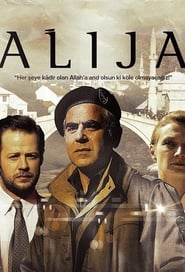
The story is set during the World War II. Seven prisoners manage to escape from the penitentiary and hide in a small village forsaken of God and men. Soon after they respire, they face a new hardship - a German subversive group appears near the village. And as the fate decree, the former 'enemies' of the Motherland turn into its fierce defenders.Alija
2018
Alija
2018
The Mission of Major Atherton
1986
This true story is made up of two episodes that show Operation Hydra. After the fall of the Uzice Republic and the success of the first enemy offensive, the British sent their mission and this series shows the events.Sensacje XX wieku
1983
Flying Phoenix
0000
Flying Phoenix
0000
Feng Ming was only 19 when he lost his life saving a child from death without hesitation. The grateful father of the rescued child grants Feng Ming a second chance at life. Unknown to Feng Ming, his soul is whisked away to a faraway ancient land. Upon waking up, he finds himself inhabiting the frail body of Thunder Kingdom’s crowned prince who is also graced with the title of the most beautiful man across all the lands. However, his beauty has a price as he attracts the unwanted attention of the minister of affairs, Rong Tian who finds every reason to torment the prince mentally and physically. As Feng Ming starts to get a hold of the conspiracies surrounding him, what will happen when the prince’s true identity is revealed? And what happened to the ‘real’ prince?Scarlet Straps
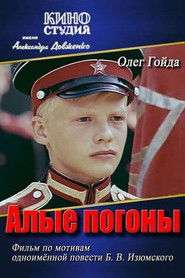
1979