War Politics TV Series - Page 85

Fortress of War
2011
Fortress of War
2011
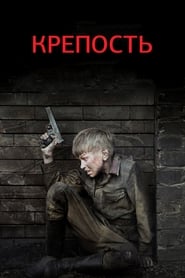
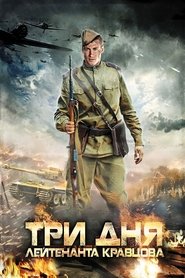
June 21, 1941, Brest fortress. Lieutenant Andrey Kizhevatov, Major Pyotr Gavrilov and Commissar Yefim Fomin were engaged in daily business. There was also a boy trumpeter Sasha Akimov from the regimental orchestra, who secretly smoked and selflessly loved the girl Vera. None of the servicemen knew that the next morning they would become the commanders of the last three hotbeds of resistance, and the boy was the only link between them in the stone cauldron of the first object of attack by Nazi troops in the USSR, the Brest Fortress.武工队传奇
2013
武工队传奇
2013
Flying Phoenix
0000
Flying Phoenix
0000
Feng Ming was only 19 when he lost his life saving a child from death without hesitation. The grateful father of the rescued child grants Feng Ming a second chance at life. Unknown to Feng Ming, his soul is whisked away to a faraway ancient land. Upon waking up, he finds himself inhabiting the frail body of Thunder Kingdom’s crowned prince who is also graced with the title of the most beautiful man across all the lands. However, his beauty has a price as he attracts the unwanted attention of the minister of affairs, Rong Tian who finds every reason to torment the prince mentally and physically. As Feng Ming starts to get a hold of the conspiracies surrounding him, what will happen when the prince’s true identity is revealed? And what happened to the ‘real’ prince?The Governor
2016
The Governor
2016
star 6When sudden tragedy forces a deputy to step into the role of governor, she faces grueling political and personal tests in order to lead her state.长城红
2015
长城红
2015
Eroi per caso
2011
Doktor Vera
2025
Doktor Vera
2025
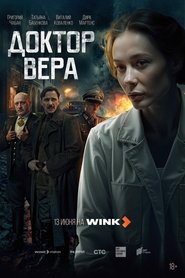
In 1941, Vera Treshnikova was the only doctor left in the city. Her hospital was under 24-hour surveillance by the Gestapo. In order to continue performing her medical duty, Vera pretended to collaborate with the fascists. The townspeople condemned her, but did not know that the girl was hiding a partisan movement center in the hospital.Odd years
2008
Odd years
2008
Hungarian documentary series, which presents the history of the country after World War II until the time of the regime.我把忠诚献给你
2015
我把忠诚献给你
2015
大营救
2012
大营救
2012
Diary of Memories
2007
第五空间
2010
第五空间
2010
Ateşten Günler
1987
Insiders
2001
Insiders
2001
Insiders analyses and discusses Australian politics with the use of a panel of political journalists and columnists and interviews with prominent politicians and commentators. Broadcast on ABC1 on Sunday mornings at 9 am, the show also features many regular commentators from various Australian media outlets and think tanks. The program is presented by veteran political journalist Barrie Cassidy as part of the ABC's Sunday morning line-up, commencing with Insiders, followed by Inside Business and then Offsiders, a sports program also hosted by Cassidy.The Invasion: The Outbreak of World War II
2014
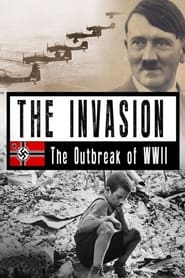
star 7On 1 September 1939, Hitler started the most fatal war in world history – a war waged to plunder, dispossess, enslave and eliminate entire ethnic groups. This German-Polish series reconstructs how Hitler triggered a chain of events that sparked a global conflagration and the intense suffering of the Polish people, the first victims of the war.Generation Borderless? Gen Z between East and West
2024
Prejudices and clichés about East and West Germany continue to shape parts of society. How does this affect Generation Z, who only know about the division of Germany from stories? Seven women and men aged 21 to 28 - representing Generation Z - offer an insight into the mindset and everyday life of a generation that is growing up in a time when the East-West conflict, political radicalization and social upheaval are more relevant than ever. The focus is on three subject areas: family and identity, business and career, and politics and social engagement.The ultimate reason for kings
1986
star 8The plot centers on a large-scale conspiracy by a group of US military personnel, led by General James Scott, against the current President Jordan Lyman. Further events show that the President, who sent his closest aides and friends to investigate, easily and almost indifferently accepts the news of their deaths, because he is only interested in his own person.Tank Eaters
2024
Tank Eaters
2024
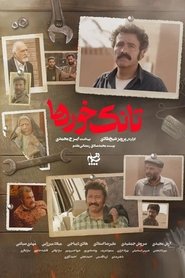
star 7An innovative look at the holy defense era, which portrays the relationship between warriors from a different perspective and connects with real stories.