War Politics TV Series - Page 96

Empire
2009
Empire
2009
Empire is a unique programme that reports on and debates global powers on behalf of an international citizen. It does so in a way whereby it questions those geopolitical, geoeconomic, corporate, and other forms of power that influence citizens across borders. Many of those are not held accountable by any one government or any one nation, and so looking at the world as the global village it has become - with its integrated societies - we try to answer the questions on the minds of many of our viewers: why and how does global power act, react? And how does it throw its weight around?Jaka Sembung
1996
Décolonisations : du sang et des larmes
2020
star 8After World War II, the French colonial empire, which dominated the lives of over 110 million people on five continents, collapsed in just under a quarter century of blood and tears.Air Bridge
2024
Air Bridge
2024
star 7.5Its plot is bound to a specific time of the cathartic end of the World War II in Serbia. The heart of the story is a unique endeavor - the largest single rescue mission of downed Allied airmen in aviation history of all time, known as the “Halyard Mission”.FleshSim: Contact for Information
2025
Flesh Simulator explores information surrounding the Las Vegas shooting in this three episode special.Hitler's American Battleground
2021
star 4.5During World War II, Nazi U-boats attacked several American ships along the North Carolina coast, turning this location into the graveyard of the Atlantic Ocean. Follow a group of marine archaeologists as they embark on an incredible mission, trying to honour those who lost their lives during the attacks, by turning this underwater battleground into a timeless memorial.Hitler Staline, le choc des tyrans
2021
star 9.3On 23 August 1939, the world was shocked to discover that Hitler and Stalin, the most intractable of their enemies at the time, had signed a pact that allowed them to divide Poland between them and gave the Nazi leader complete freedom to concentrate his forces in the West, against France and the United Kingdom. Through this agreement, Europe was to be thrown into war. For a long time, the relationship between Hitler and Stalin was ignored: their mutual fascination, their moves to get closer, the marks of confidence they exchanged and all the benefits they derived from the German-Soviet pact, before resuming their war to the death in June 41 with the "Barbarossa" operation.Talyanka
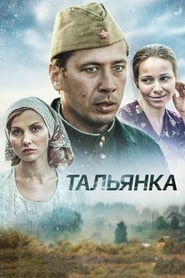
2014
Talyanka
2014
The story of the love of an Italian actress and a Soviet pilot during World War II and in the first post-war years.67 Days: The Republic of Uzhitze
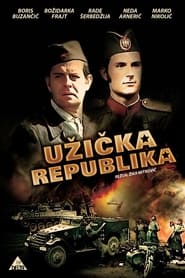
0000
star 1TV series which serves as an extended version of the film of the same title.Mørch og makta
2025
Mørch og makta
2025
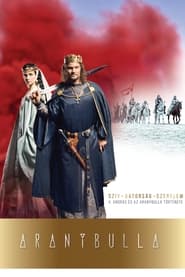
Aranybulla
2022
Aranybulla
2022
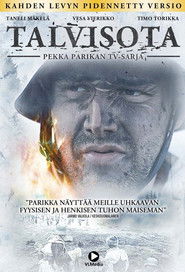
star 2King Andrew II's accession to the throne proved to be an adventure, and he set to work to take decisive action against the country's enemies. In 1222, he passed a set of laws that changed economic policy and became a unique document in the history of Europe.The Winter War
1991
Smile, General
2023
Smile, General
2023
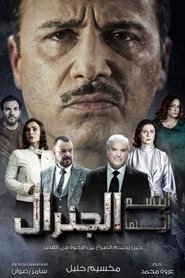
star 10A shocking scandal shakes the nation's top brass, sparking a ruthless power struggle between its president and his brother in uniform.My Love Hit the War
2016
My Love Hit the War
2016
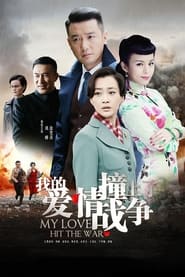
During the 1937 Second Sino-Japanese War, Fang Yuan seeks revenge for his family’s death and joins the resistance, forming an alliance with Dr. Chen Ruge, whom he initially suspects of being a traitor. As they fight together, their bond deepens, and despite misunderstandings, they reunite after China’s victory in the war.There is No Third
2009
There is No Third
2009
star 5Occupied Western Ukraine, 1944. The Soviet High Command is concerned about a large-scale, highly classified construction running through the line of the Soviet offensive. A reconnaissance unit is deployed and a Soviet scout is placed behind enemy's lines in order to obtain information about the project.I ve smrti sami
2004
I ve smrti sami
2004
United Brothers
0000
United Brothers
0000
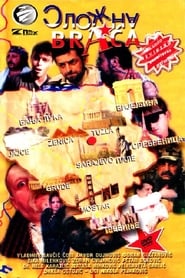
star 7.5Taking place just after the end of Bosnian War, the series is mostly set in a kafana named Složna braća owned by Halimić brothers and located on a small patch of UN-controlled territory (covering 0.0657 km2) not claimed by any of the three warring sides. Serbs, Bosniaks, and Croats, otherwise very hostile to each other following a ferocious civil war, regularly visit the said kafana in no man's land in order to arrange mutual black market activities (weapons and food trade, oil and cigarette smuggling, etc.). When the word gets around about an important weapons shipment passing through the territory that can supposedly completely change the division of power in the Balkans, the place becomes a lively hub of espionage, deal making, and skulduggery.Morpekhi
2011
Morpekhi
2011