Animation TV Series - Page 445

爱我吧,苏大人 动态漫
2019
爱我吧,苏大人 动态漫
2019
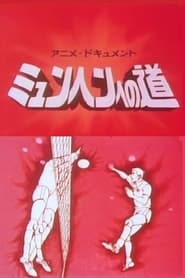
Road to Munich
1972
Road to Munich
1972
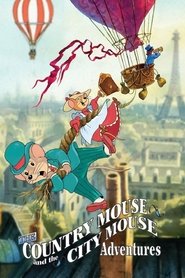
A short series based on volleyball at the Munich Olympics. The series features a mix of live action blended with animation.The Country Mouse and the City Mouse Adventures
1998
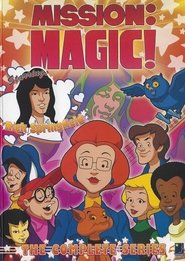
star 7.7Follow mice Emily and her cousin Alexander as they go on adventures around the world in the early 20th century, usually to stop the evil rat No-Tail No-Goodnik.Mission: Magic!
1973
Mission: Magic!
1973
star 6Miss Tickle and and the students of the after-school group The Adventurers Club travel to magical lands with pop star Rick Springfield.Wumpa's World
2001
Wumpa's World
2001
A children's television series for three to five year olds that stars a collection of puppet characters who live in the Canadian North: Wumpa the walrus, Tiguak the polar bear, Seeka and Tuk the snow hares, and Zig and Zag, a pair of fun-loving snowmobiles. Wumpa the Walrus opens the episode with a concept and proceeds to tell a story concerning that concept. Each episode has a specific message or lesson within it.반지의 비밀일기
2017
반지의 비밀일기
2017
Hanaori-san Still Wants to Fight in the Next Life
0000
Ryūsei Narukami is your typical NEET. He spends his days shut in his room playing video games without a care in the world, living a lazy life. But the truth is, Ryūsei used to be a powerful demon king in another world! So why not spend this new life doing whatever he wants? Except, he wasn't the only one reincarnated into this world. The hero who struck him down is here too—and she's a really cute high school girl?! Can Ryūsei survive reuniting with his foe in a new world, or will he find himself fighting even in this life?Summer Memories
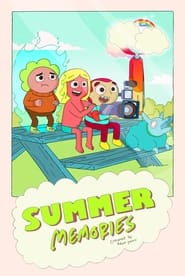
2022
Summer Memories
2022
Follow the adventures of best friends Jason and Ronnie as Jason looks back on the most pivotal summer of his life (which was just a few weeks ago)! This is Jason’s summer of change…and he fears change. Lucky for him, he has his adventurous BFF Ronnie right by his side.Max & Maestro
2018
Our Faita
2013
Our Faita
2013
A humorous animated series from Transcarpathia. It tells the story of a young man who has lost the will to live because his girlfriend left him, he was fired from his job, and even his cat left him. After the guy is hit by a garbage truck and ends up in paradise, an intern of the Apostle Peter advises him to find the mysterious Myroslav Rakatosh, who can restore our hero's will to live. After that, our hero is returned to earth. And he begins his search for Myroslav Rakatosh... In the cartoon, you will learn many things you would never have imagined about the picturesque Transcarpathia. For example, about the bograch volcano, or the "baron's paprikosh," how Angelina Jolie adopted Radvan gypsies, and many other equally interesting things...100堂动画课带孩子穿越唐诗大世界
0000
100堂动画课带孩子穿越唐诗大世界
0000
MeteoHeroes
2020
MeteoHeroes
2020
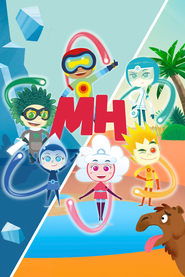
Fulmen, Nix, Nubess, Pluvia, Thermo and Ventum are six ordinary kids who discover that they have extraordinary powers: they can control the weather! With the help of the Meteo Expert Center (aka the MEC) located on the Gran Sasso mountain in Italy, they learn to handle their superpowers and to use them to solve the challenges our planet faces every day –. And of course, as well as learning what it means to be superheroes, these kids have to face everyday challenges all youngsters face: handling friendships and differences, teaming and growing up – all while saving Planet Earth!.The Herbs
1968
The Herbs
1968
star 9The Herbs is a television series for young children made for the BBC by Graham Clutterbuck's FilmFair company. It was written by Michael Bond, directed by Ivor Wood using 3D stop motion model animation and first transmitted from 12 February 1968 in the BBC1 Watch with Mother timeslot. There were 13 episodes in the series, each one 15 minutes long. A spin-off series entitled The Adventures of Parsley was transmitted from 6 April 1970 in the 5-minute period between the end of children's TV and the BBC Evening News. This had 32 episodes, some of which were released on VHS as Parsley the Lion and Friends. The Herbs consisted of a fantasy mix of human and animal characters inhabiting the magical walled garden of a country estate. At the beginning of each episode, the narrator spoke the magic word, "Herbidacious", which caused the garden gate to open. As with The Magic Roundabout, the sophisticated writing style and narrative delivery of The Herbs meant that the appeal was somewhat broader than was originally intendedImago
2022
Imago
2022
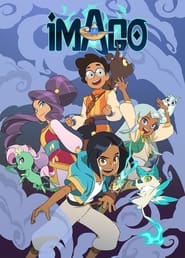
In the kingdom of Ramal, (a modern version of the 1001 Nights) where jet-powered flying carpets meet legendary beings straight out of Middle Eastern legends. Zayn is a young boy who has always dreamt of having an imago, and his wish will be granted if he can free Azrokh, an all-powerful imago who has been imprisoned in a magic lamp! But with great power comes great responsibility. Zayn and his friends (Shazemine, Zora and Bo) are about to be plunged into a super-dangerous adventure – the quest of the 21 Ultimagos – their only hope if they are to vanquish the Queen of the Shadows, their kingdom’s greatest enemy but whom they have accidentally released...Golden Girls 3033
2022
Golden Girls 3033
2022
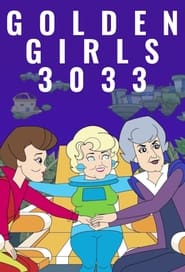
star 10The Golden Girls are back and they all still share a house in Miami — but it’s the year 3033, they’ve discovered the Fountain of Youth, and now Sophia walks around in the hulking body of a giant yellow robot, among other colorful changes.あじさいの唄
2004
あじさいの唄
2004
Laurel & Hardy
1966
Dongguo Xiaojie
2016
Dongguo Xiaojie
2016
Dongguo Xiaojie, a young girl, has lived together with her mother ever since she was little. On the year she turned sixteen, her mother suddenly contracted a "Grave Illness". To save her mother, Dongguo Xiaojie set foot into the unknown on a dangerous journey. Accompanying her on this journey is her sworn elder brother Mo Zixuan and the mysterious youth, Life's Hardship. However, danger arises again and again as they are continuously attacked by people they meet on their journey. Just what conspiracy is hidden behind this journey?