Animation TV Series - Page 483

Fantômette
2000
Fail in Love
2019
Fail in Love
2019
star 7Dive into the funniest and weirdest real-life hookups stories on dating apps! Swiping right on Tinder could lead to infinite possibilities of stories that can be great as well as awkward, or simply hilarious. “Fail in Love” brings up some of the weirdest, and funniest online dating stories. For better... or for worseVilla Dulce
2004
Villa Dulce
2004
star 5.2The smaller the town, the bigger the mess. A group of children have fun while they make the town's major life impossible.Hamsters
2023
Hamsters
2023
Alley-Oop
0000
Alley-Oop
0000
Zuo Xiaochuan, a teenager in a northern town, loves basketball very much and enjoys rare physical conditions, but he is less skilled. His grandaunt Ma Tian accidentally notices his talent and suggests him to apply for Nanjing Yuanchuan Middle School as a student with sports talent to receive systematic trainings. But to his surprise, the school had no basketball team at all and all other players are amateur players. Yet, from having the first teammate Cai Zhen to playing the first game, Xiaochuan has overcome many obstacles and difficulties with his passion for basketball. He gets tougher and tougher in an environment full of “rules”. He infects everyone with his passion and eventually brings the team together.Hanoka
2006
Hanoka
2006
Hanoka is a 12-episode anime created by RAMS and Fanworks. Directed by Aruji Morino, it was broadcast in Japan on Kids Station between August 7, 2006 and October 23, 2006. It is the first TV anime series entirely created with Adobe Flash animation. The opening theme of the anime is "Dual Love on the planet ~Hanoka~" by Sakura Nogawa. On October 4, 2006, King Records released a maxi single for the anime's opening theme, "Dual Love on the planet ~Hanoka~". It was sung by Sakura Nogawa. The song was composed by Hironobu Kageyama.Omniscient Reader
0000
Omniscient Reader
0000
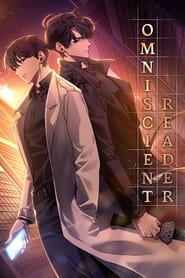
Dokja was an average office worker whose sole interest was reading his favorite web novel 'Three Ways to Survive the Apocalypse.' But when the novel suddenly becomes reality, he is the only person who knows how the world will end. Armed with this realization, Dokja uses his understanding to change the course of the story, and the world, as he knows it.Sweet J Presents
0000
Sweet J Presents
0000
悟空传
0000
悟空传
0000
Speed Racer
1967
Speed Racer
1967
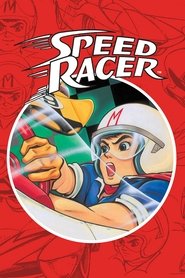
star 7.5Speed Racer is a teenage driver who races around the world in his super-technological car, the Mach 5, created by his father, a former racer. The car has several special features that help Speed tackle difficult terrain and get rid of dishonest opponents—which happens frequently. He experiences these adventures alongside his girlfriend Trixie, his younger brother Spridle, and his pet monkey, Chim-Chim. Together, they face thrilling challenges and show that courage and fair play make all the difference.Hideous Henk
2022
Hideous Henk
2022
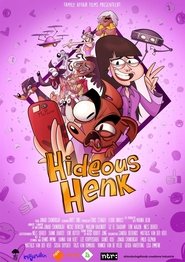
Unsightly chihuahua Henk hates people, but does wag his tail when he is finally adopted, in this animation series. Unfortunately by a nasty influencer fond of attention and outward appearances. Should Henk escape? But what will the real world be like?Galactic Whirlwind Sasuraiger
1983
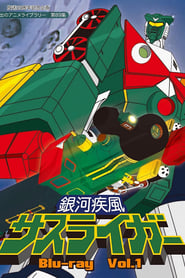
star 5Galactic Whirlwind Sasuraiger was an anime series aired from 1983 to 1984 in Japan. There were 43 episodes aired. Other loosely translated names include "Sasuraiger", "Galactic Gale Sasuraiger", "Galaxy Whirlwind Sasuraiger" and "Wonder Six." It is the sequel to Baxingar and is the final member of the J9 Series.Frogger
1983
Frogger
1983
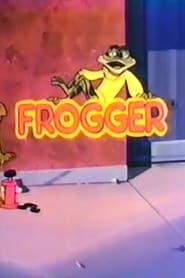
Frogger is an ace reporter of the swamp who works at The Swamp Gazette. He and his friends Shellshock "Shelly" Turtle and Fanny Froggo out in search of crazy stories to publish in the newspaper. Part of CBS "Saturday Supercade".바나나차차
2019
바나나차차
2019
Pikku Kakkonen
0000
Pikku Kakkonen
0000
star 7Pikku Kakkonen is an ongoing Finnish magazine-type children's TV show shown on YLE TV2. The first episode aired on January 11, 1977. It finished with a bedtime story read by Lasse Pöysti and an East German Sandman animation, setting the format for hundreds of later episodes. The Pikku Kakkonen show is based in Tampere, and its signature melodies have been made into mobile phone ringing tones. The intro animation by Camilla Mickwitz was made in 1983.Jurassic What If...?
2023
Jurassic What If...?
2023
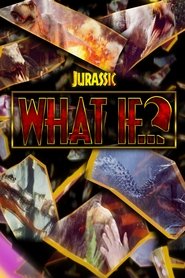
star 10'Jurassic What If...?' is a FAN-MADE Project not affiliated with Universal Pictures nor Disney / Marvel Studios. It is a parody entirely under 'Fair Use'. Chaos. Containment. Consequences. This isn't an act of sheer will, it's a moment of Cataclysmic change... But what if different characters or creatures had entirely different outcomes? What if the events of each movie played out differently? Join us, as we answer a question 65 Million Years in the making...What If...?Bird's Eye View
2022
Bird's Eye View
2022
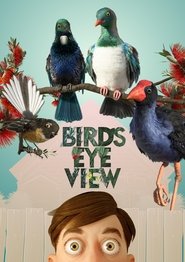
A flock of feathered friends sit together to ponder and debate the bizarre behaviour of humans in their natural habitat.Hulk
1966
Hulk
1966
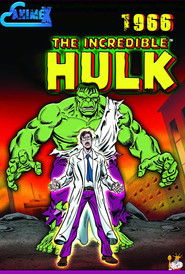
star 6.8The adventures of a nuclear scientist cursed with the tendency to turning into a huge green brute under stress.