Animation TV Series - Page 493

Speed Racer
1967
Speed Racer
1967
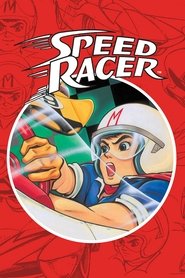
star 7.5Speed Racer is a teenage driver who races around the world in his super-technological car, the Mach 5, created by his father, a former racer. The car has several special features that help Speed tackle difficult terrain and get rid of dishonest opponents—which happens frequently. He experiences these adventures alongside his girlfriend Trixie, his younger brother Spridle, and his pet monkey, Chim-Chim. Together, they face thrilling challenges and show that courage and fair play make all the difference.The Dark Years
2007
The Dark Years
2007
Animated Canadian tales of the Great Depression as told by the staff of The Toronto Star.The Diary of Tortov Roddle
2003
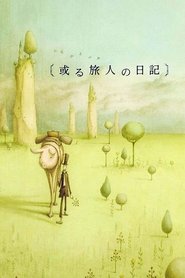
star 7.3Follow Tortov as he journeys through very surreal, magical, picturesque landscapes, meeting interesting characters and circumstances on the way. Accompanied by his long-legged pig friend, Tortov takes us on an on-going adventure of peaceful contemplation.Bob Morane
1998
Bob Morane
1998
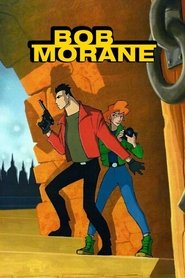
star 6.7Bob Morane, martial arts expert and adventurer, fights all mad scientists, demonic beings, tyrants ... all over the world with the help of his best friend, Bill Ballantine, and journalist Sophia Paramount.喵能战士
2023
喵能战士
2023
茶婆婆渔婆婆蚕婆婆
2022
茶婆婆渔婆婆蚕婆婆
2022
Mission Odyssey
2002
Damo and Darren
2014
Damo and Darren
2014
Follow the day to day antics and adventures of two underprivileged derros, as they discuss philosophical subjects like alcohol, ciggies & dole-bludging.The Under-Undergrounds
2016
star 10This is the story of Hector, a boy who is kicked out of his band because they think he is not cool enough. On his way home, upset about the happening, he falls in a hole and ends up in an underground world, inhabited by many strange creatures. Although it is in this weird place that he is going to find everything he was looking for: true friends and a rock'n'roll band that doesn't care about stereotypes, only the passion for music. The Under-Undergrounds, together, will have lots of fun adventures trying to help Hector find his way back home. Tolerance, diversity, companionship and self-knowledge are values that our "Rock Star hero" will learn in order to be respected and loved by the "Undergrounders".William's Wish Wellingtons
1994
star 5.8William's Wish Wellingtons is an animated BBC children's television series made by Hibbert Ralph Entertainment that was first aired from 25 October 1994 to 28 November 1997. It was narrated by Andrew Sachs of Fawlty Towers fame. It was also translated into Gaelic and aired as Botannan Araid Uilleim on BBC Two Scotland during the morning. It was also shown on the American TV show Big BagCasually
1993
To Trøtte Typer
2000
To Trøtte Typer
2000
star 7.5There is a war out there and two wasted wankers - Odd & Geir - two minor criminals, are right there in the middle of it. Every now and then they retreat to Geir's one-room-flat seeking refuge in drugs, alcohol and television. Every now and then a friend drops by. This time it is their sidekick Kælle. He has been eating in a Chinese restaurant and become ill. This leads the conversation onto rat meat amongst other negative things.猪猪侠之竞速英雄传
2022
Plastic Man
2009
Plastic Man
2009
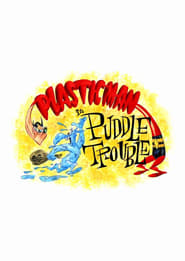
Warner Bros. Animation and Cartoon Network commissioned a Plastic Man television pilot episode "Puddle Trouble" in 2006. Produced by Andy Suriano and Tom Kenny, and designed and storyboarded by Stephen DeStefano. Tom Kenny also performed the voice of Plastic Man in the program. Cartoon Network decided not to pick up Plastic Man as a series and has never aired the episode. "Puddle Trouble" has been released on the Plastic Man: The Complete Collection DVD set. In 2012, Andy Suriano and Tom Kenny would later collaborate, under the DC Nation label, to produce a micro-series successor to the unaired pilot.Splat & Harry
2020
Splat & Harry
2020
Esther
0000
Esther
0000
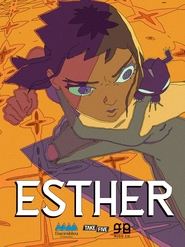
Esther is a young girl who, in order to fulfill her dream of becoming a true Healer, must travel thousands of miles with a strange mentor: an Inca God who lives in the body of a black cat.Tashi
2014
Tashi
2014
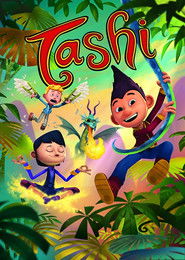
star 3When Jack's parents bundle him off to stay with his distant cousin Tashi, the two boys become swept up in a series of wild adventures exploring a fantastical land far, far away and protecting Tashi's village from a host of creatures and villains.KiiYii
2017
KiiYii
2017