Western TV Series - Page 13

Gun Shy
1983
Gun Shy
1983
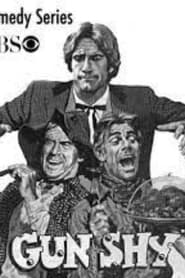
star 5Gun Shy is an American western comedy television series that aired from March 15 until April 19, 1983.Alentejo Sem Lei
1991
Alentejo Sem Lei
1991
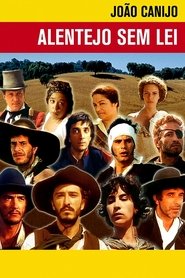
star 4Set in Alentejo in the mid-19th century, in the period following the Liberal Wars. In a sparsely populated and almost wild land, without shadow and without law, violence dictates the existence of Bando do Zarolho.The Lazarus Man
1996
The Lazarus Man
1996
star 7.9Shortly after the Civil War, a man pulls himself out of a grave in the South wearing Southern clothing but carrying Northern gold and carrying a US Army revolver. He has no memory save for some gorgeous brunette and being beaten over the head by a man in a derby. He calls himself "Lazarus" after the man Jesus resurrected until he can figure out who he is and why he was buried alive and left for dead.Dundee and the Culhane
1967
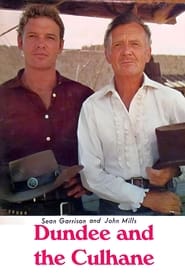
star 4Dundee and the Culhane is an American Western television series starring John Mills and Sean Garrison that aired on the CBS television network from September 7 to December 13, 1967.1944
0000
1944
0000
A prequel to Yellowstone featuring a new generation of the Dutton family ranchers in the 1940s.Zorro and Son
1983
Zorro and Son
1983
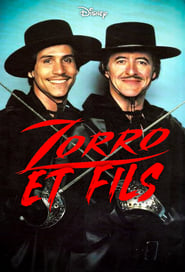
star 5Zorro and Son is an American short-lived television Western based on the legendary character Zorro that aired on CBS. Created by Walt Disney Pictures, the series stars Henry Darrow as Zorro and Paul Regina as his son, Zorro, Jr.. It featured the same theme song by Norman Foster and George Bruns.Dominion Creek
2015
Dominion Creek
2015
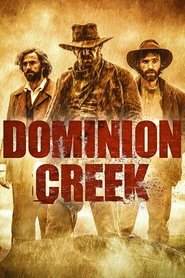
star 4.2The story of the Connolly Brothers; three Irish emigrants who travel from Montana to the Yukon during the Klondike gold rush of the 1890’s in the hope of striking it rich where they become embroiled in a deadly feud with the man who runs the town.Colt .45
1957
Colt .45
1957
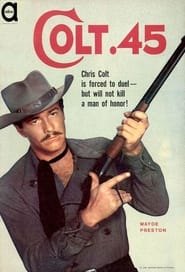
star 6Colt .45 is an American Western series which aired on ABC between October 1957 and September 1960. Christopher Colt was apparently a gun salesman but was in fact a government agent tracking down notorious bad guys. The half-hour program is loosely based on the 1950 Warner Bros. film of the same name, starring Randolph Scott. Colt .45 was part of the William T. Orr-produced array of westerns which Warner produced for ABC in the late 1950s and early 1960s.Wild Boys
2011
Wild Boys
2011
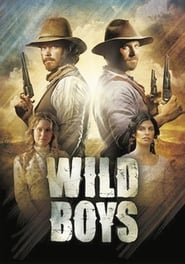
star 7Wild Boys is an Australian television period drama series that began airing on the Seven Network on 4 September 2011. It is produced by Julie McGauran and Sarah Smith from Southern Star and John Holmes. The series is set in and around the fictional town of Hopetoun and principally filmed in Wilberforce on the Hawkesbury, Nelson, and Glenworth Valley on the New South Wales Central Coast.The series premiered in the UK on TCM UK on 3 March 2013. The series was not renewed after the first season of 13 episodes.Further Adventures of Spin and Marty
1956
star 7About a freckle-faced Spin and wealthy city kid Marty at the Triple R Ranch summer camp. Adding to the fun are exclusive interviews with the original cast members and a special tour of the original filming site.The Tall Tales of Jim Bridger
2024
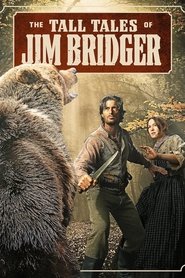
Incredible tales from the western frontier inspired by the adventures of mountain man Jim Bridger. As Bridger guides a new wave of Americans heading west, he must help them survive the same life-and-death situations that made him a legend.Ned Blessing
1993
Ned Blessing
1993
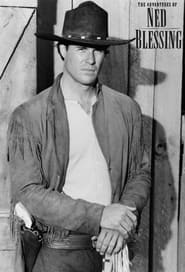
star 5Alone on Executioner's Row, Ned Blessing is a haggard, old cowboy and former sheriff. With nothing more than reflections on a life that's been filled with danger and excitement, he marks his time waiting and hoping that the man responsible for his imprisonment makes an appearance before the hangman does. With only a few days left to live, Blessing recounts his unbelievable life story.The Rough Riders
1958
The Rough Riders
1958
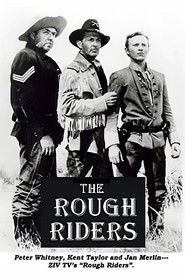
star 6.3The Rough Riders is an American Western television series set in the West after the American Civil War. It aired on ABC for the 1958-1959 television season. It was produced by Ziv Television, the production company responsible for such hit shows as Bat Masterson, Tombstone Territory, Sea Hunt, and Highway Patrol.The Englishman's Boy
2008
The Englishman's Boy
2008
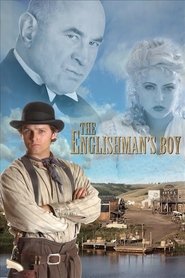
star 3.2Haunting Film recalls a tragic journey that culminates in one of the most brutal historical events in Canadian history - the Cypress Hills MassacreMackenzie's Raiders
1958
Mackenzie's Raiders
1958
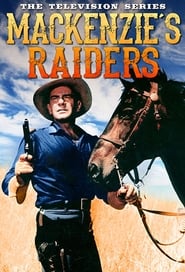
star 5.8Mackenzie's Raiders is an American Western television series starring Richard Carlson that aired thirty-nine episodes in syndication from 1958 to 1959. The series was narrated by Art Gilmore.The Cowboys
1974
The Cowboys
1974
star 5The Cowboys was a short-lived Western television series based on the 1972 motion picture of the same name starring John Wayne. It aired on the American Broadcasting Company television network from February 6 to May 8, 1974. The television show starred Jim Davis, Diana Douglas, Moses Gunn, A Martinez, Robert Carradine, and Clay O'Brien. David Dortort, best known for Bonanza and The High Chaparral, produced the series. The television show, like the movie, followed the exploits of seven boys who worked on a ranch in 1870s New Mexico. The Cowboys began as an hour-long series, but ABC decided to reduce running time to a half hour format. The format change did not lead to increased viewers, and the show was the victim of early cancellation. Guest stars included Cal Bellini as Wa-Cha-Ka in "The Indian Givers", Kevin Hagen as Josh Redding in "Death on a Fast Horse", and Lurene Tuttle as Grandma Jesse in "Many a Good Horse Dies".Boots and Saddles
1957
Boots and Saddles
1957
star 5Boots and Saddles is an American Western television series created by Robert A. Cinader which aired in syndication from 1957 to 1958.Four Feather Falls
1960
Four Feather Falls
1960
star 6Four Feather Falls was the third puppet TV show produced by Gerry Anderson for Granada Television. It was based on an idea by Barry Gray, who also wrote the show's music. The series was the first to use an early version of Anderson's Supermarionation puppetry. Thirty-nine 13-minute episodes were produced, broadcast by Granada from February until November 1960. The setting is the late 19th-century fictional Kansas town of Four Feather Falls, where the hero of the series, Tex Tucker, is sheriff. The four feathers of the title refers to four magical feathers given to Tex by the Indian chief Kalamakooya as a reward for saving his grandson: two allowed Tex's guns to swivel and fire without being touched whenever he was in danger, and two conferred the power of speech on Tex's horse and dog. Tex's speaking voice was provided by Nicholas Parsons, and his singing voice by Michael Holliday. The series has never been repeated on British television, but it was released on DVD in 2005.老旦是一棵树
1998
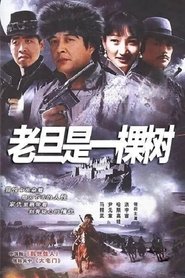
老旦是一棵树
1998
Killer Women
2014
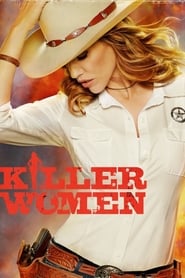
Killer Women
2014
star 5.1Of all the notorious lawmen that ever patrolled the violent frontier, none are more storied than ballsy and badass Molly Parker, one of the first women to join the Texas Rangers.