Documentary TV Series - Page 113

Trucks!
1999
Trucks!
1999
Trucks! is an American television program that airs weekends as a part of Spike TV‘s Powerblock. It is hosted by Kevin Neils Tetz and Ryan Shand. The program focuses on automotive mechanics involving trucks and SUVs, ranging from improvement, to customizing, to creative works. The show is involved with racing and/or customizing trucks, and in the past the show included segments called "How It Works" where the host would visit with various technical instructors at Wyotech to discuss automotive related topics such as how a particular mechanical device operated or the specialized equipment it takes to diagnose or repair a vehicle.Bobby Kennedy for President
2018
star 7.8Historic footage and leading voices of the era examine the "Bobby Phenomenon" of the 1960s and the legacy of the man who helped redefine the country.Pandemic: How to Prevent an Outbreak
2020
star 6.9In this docuseries, meet the heroes on the front lines of the battle against influenza and learn about their efforts to stop the next global outbreak.Winston Churchill: The Valiant Years
0000
star 8.5The Valiant Years was a documentary produced by ABC based on the memoirs of Winston Churchill, directed by Anthony Bushell and John Schlesinger, narrated by Gary Merrill and with extracts from the memoirs voiced by Richard Burton. It ran in the United States from 1960 to 1961, in 27 30-minute episodes and was broadcast in the UK by the BBC from February to August 1961. Its incidental music was written by Richard Rodgers, who won an Emmy for it in 1962. Scriptwriters included Victor Wolfson a dramatist and writer, Quentin Reynolds, William L. Shirer an American journalist, war correspondent and historian, and Richard Tregaskis. One of the program's London-based producers was actor Patrick Macnee, just prior to his being cast as secret agent John Steed in the long-running cult TV series The Avengers.,映像の世紀プレミアム
2016
映像の世紀プレミアム
2016
CNN Special Investigations Unit
2007
star 8CNN Special Investigations Unit is an American investigative documentary program on CNN weekends. Expanding upon CNN Presents, SIU focuses on each episode being an in depth investigative report about news stories being covered, commonly featuring a number of interviews with experts on the issue and people who have witnessed the story taking place. The reports are commonly long-form, allowing for the network to cover more information and perspectives than would be available during a 5-minute report on another CNN program, such as CNN Newsroom. Compared to Presents, the show has taken a slightly larger point of the reporting being done by CNN reporters, the first commercials promoting the program largely showing pictures of anchors and reporters on locations, asking questions to people on the locations. In addition, the look and feel of the show has changed somewhat drastically, adding more emphasis on the graphics used to present the program itself, in addition to the stories being covered. In addition, presentatiAACTA Awards
1976
AACTA Awards
1976
The Australian Academy of Cinema and Television Arts (AACTA) Awards are a continuum of the AFI Awards, which have honoured screen excellence in Australia since 1958. The AACTA Awards recognise film, television and documentary screen craft excellence - including screenwriting, producing and acting, through to cinematography, composition and costume design - across over 40 Awards. As Australia's highest film and television Awards, the AACTA Awards are Australia's equivalent of the Oscars and the BAFTAs. The AACTA Awards are held annually in Sydney in recognition and celebration of Australia's highest achievements in film and television, as judged by the industry itself. AFI | AACTA also recognises screen excellence, regardless of geography, through the AACTA International Awards, held each January in Los Angeles.Uncovered
2016
Ride
2016
Ride
2016
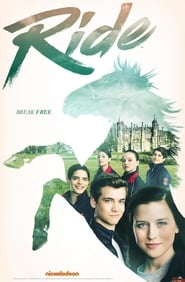
star 8.6The adventures of Katherine ' Kit' Bridges who relocates to England when her father joins the faculty at Covington Academy, an elite equestrian boarding school.Biografías
2002
The Pharmacist
2020
The Pharmacist
2020
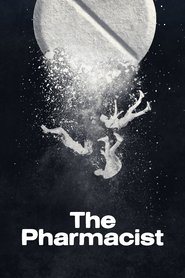
star 7.4After his son's tragic death, a Louisiana pharmacist goes to extremes to expose the rampant corruption behind the opioid addiction crisis.王立群读《史记》秦始皇
2008
向设计提问
2024
向设计提问
2024
This Is the Zodiac Speaking
2024
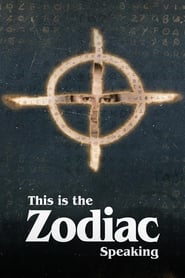
star 7.3In this true-crime docuseries, a family searching for answers shares clues and eye-opening testimonies about the prime suspect in the Zodiac murders.Making Of Mitsuo Iso's Latest Series "The Orbital Children"
2022
star 5.5Director Mitsuo Iso, winner of numerous awards for his anime series "Dennou Coil," presents his latest original anime "The Orbital Children." Set in the year 2045, when the development of AI has made it possible for anyone to go to outer space, this near-future story is about children who are left behind on a space station due to an accident and face an imminent crisis. We will closely observe the passionate production of the animation prior to the film's release! We will tell you all about the charms of the remarkable work "The Orbital Children"!Triads: The Chinese Mafia Conquering the World
2023
star 8.2Founded in the 17th century, the triads have built their myth around fighting China's enemies. Who are they? What role do they play in Chinese culture and history? What business are they involved in? What are their strategies?SportsCentury
1999
SportsCentury
1999
star 9SportsCentury is an ESPN biography program that reviews the people and athletic events that defined sports in North America throughout the 20th and 21st centuries. In 1999, ESPN counted down the Top 50 Athletes of the 20th Century, selected from North American athletes and voted on by a panel of sports journalists and observers, premiering a new biography highlighting each top athlete every week throughout the year. The episodes for the top two athletes, Michael Jordan and Babe Ruth, appeared on a special combined edition broadcast on Christmas Day on ABC. The top two names were announced in no particular order, and the final positioning was announced at the conclusion of the two episodes. An additional list of numbers 51-100 were announced on the ESPN SportsCentury website. Themed specials such as Greatest Games, Greatest Coaches, Greatest Dynasties, and Most Influential Individuals were premiered throughout the year, as well as six SportsCenter of the Decade programs. After the initial run was complete, the epiWild China With Ray Mears
2021
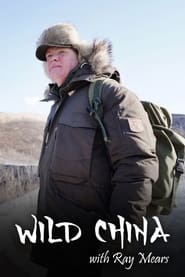
star 8Ray Mears is on a journey of discovery among the landscapes and wildlife of China.Starting in the capital Beijing, and taking in wonders of the world like the Great Wall of China, Ray walks with elephants in the country's tropical rainforest, joins rangers rewilding the nation's giant pandas, searches for the elusive snow leopard, explores one of its most famous landscapes in Karst country, comes face to face with a brown bear, and treks in the foothills of the Himalayas alongside herbal medicine experts, uncovering secrets of its plants.Retro Tech
2019
Retro Tech
2019
star 9Follow tech guru Marques Brownlee as he uncovers how iconic technology of the past came to life and shaped history. In each episode, Marques meets with fellow YouTube creators, experts, and celebrity guests, to explore the impact each piece of vintage tech has had on our culture and why these pieces remain so revolutionary.Victory at Sea
1952
Victory at Sea
1952
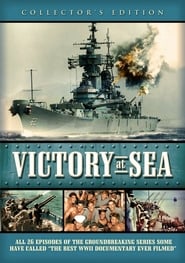
star 6.8Victory at Sea is a documentary television series about naval warfare during World War II that was originally broadcast by NBC in the USA in 1952–1953. It was condensed into a film in 1954. Excerpts from the music soundtrack, by Richard Rodgers and Robert Russell Bennett, were re-recorded and sold as record albums. The original TV broadcasts comprised 26 half-hour segments—Sunday afternoons at 3pm in most markets—starting October 26, 1952 and ending May 3, 1953. The series, which won an Emmy award in 1954 as "best public affairs program", played an important part in establishing historic "compilation" documentaries as a viable television genre. Over 13,000 hours of footage gathered from US, British, German and Japanese navies during World War II were perused in the making of these compelling episodes.