Documentary TV Series - Page 202

Inside Cinema
2020
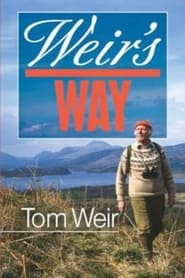
Weir's Way
1979
Weir's Way
1979
Tom Weir is regarded as one of Scotland's national treasures. His series 'Weir's Way' is one of the most popular and enduring programmes commisioned and broadcast about Scotland. Tom travels around Scotland exploring its landscape, natural history and meeting its people. In each half hour programme Tom delves into social history, physical geography and the life and times of people in the area - past and present. This is done with the charm and civility that Tom has become known for.Discover the Great Silk Road
2012
The Silk Road, a road full of legends, has made many contributions to the progress of human civilization and created a group of Silk Road figures who overcame numerous difficulties and obstacles with courage and perseverance, and have been passed down through the ages. Their goals may not be the same, envoys for peace, soldiers for war, monks for truth, merchants for profit, but they all have to go through the test of long journeys to achieve their goals. It is because of their perseverance that they can leave behind stories that have been passed down through the ages, and that the Silk Road, which has declined, is still desirable and fascinating today.The Trials of Gabriel Fernandez
2020
star 7.4A boy’s brutal murder and the public trials of his guardians and social workers prompt questions about the system’s protection of vulnerable children.Meet The Meerkats
2021
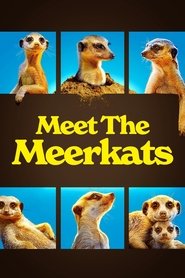
Meet The Meerkats
2021
star 8Meet three rescued meerkat families (mobs) who are learning the way of life in the wild for the very first time.Urban Legends
2007
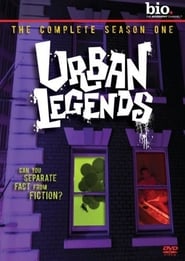
Urban Legends
2007
star 7.2Urban Legends is a 30 minute 2007 television documentary-style series hosted by Michael Allcock. David Hewlett became the new host in 2011. In each episode, three urban legends are dramatized and presented to the television audience; the audience is then to speculate which one or two of the three is true. Each legend has witnesses to tell the story. For the one or two fake legends, the witnesses are actors, while the true legend uses real people affected by the story. Included in each episode are two quick quiz-like stories, called mini-myths, which air before the commercial breaks. Each will begin with the number of the mini myth and its name, followed by the story. After the commercial, the answer to the mini-myth is announced and the rest of the programming continues as it previously had. The show originally aired on the Biography Channel in the U.S., History Television in Canada and FX in the United Kingdom where it was hosted by Mark Dolan. It has also aired in Argentina, New Zealand, Sweden, Norway, AustraliaVolta stin Aridaia
2015
Sake on the Rails with Seiji Rokkaku
0000
star 8A travel program in which the actor and musician, Seiji Rokkaku, rediscovers Japan through his unique perspectives on railways and ... alcohol. On his journeys, he makes impromptu stops along the way, and embarks on an exploration of sake breweries and railway heritage. All of this is accompanied by Rokkaku's own or recommended music.The Crash Detectives
2018
The Crash Detectives
2018
Series going inside the cordon with Gwent Police's dedicated forensic collision investigators, as they deal with serious incidents on the roads.Chasing Monsters
2015
Chasing Monsters
2015
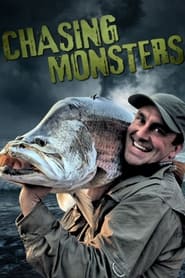
star 6From giant barracudas to 500lb stingrays, CHASING MONSTERS takes viewers on a high adrenaline quest to seek out the world's most colossal underwater creatures in remote and dangerous corners of the planet. Hosted by extreme angler and adventurer Cyril Chauquet, this high-stakes series explores the elusive monster fish living in the hidden depths of the oceans, lakes, and rivers.Shock Docs
2020
Shock Docs
2020
star 5.5A documentary series that takes a fresh look at true and terrifying tales of paranormal encounters.Masterminds
2003
Masterminds
2003
star 10Masterminds was a true crime documentary television series produced in Canada with truTV. As of February 2011, the program is broadcast on History Television and Global TV in Canada and truTV in the United States. Each 30 minute episode features one true crime story. The profiled crimes generally involve large sums of cash or merchandise and, more important, extremely unique and/or elaborate methods of criminal operation which were never before seen by law enforcement agencies. With a few notable exceptions, most criminals profiled in this series were caught within a couple of years of committing their crime.Hacked
2021
Hacked
2021
star 6.5You are never alone. Your movements are constantly monitored, as are your choices and opinions. Everything is registered and monitored. How easy is it to take over your digital life? And how easy would it be for an attacker to take over companies and authorities in Sweden? The series Hackad is an experiment where hackers tricks their way into companies and take over their networks. We get to see how easy it is to follow every trace that a private person leaves behind and how easy it can be to make payments in someone else's name.Suspicion
2015
Suspicion
2015
star 6.7Suspicion takes the POV of an individual whose curiosity becomes their worst nightmare, as the sights and sounds of a 'normal' neighborhood or community, transform into terrifying glimpses of an unfolding horror story.Prominentenküche
1979
Prominentenküche
1979
Building Giants
2018
Building Giants
2018
star 7.7This documentary series showcases how key technological innovations enable giant superstructures to be built. Footage filmed during construction along with CGI reveal the building process with astonishing detail.The Line
2021
The Line
2021
star 7.1In covert modern warfare, the line between right and wrong has blurred. This docuseries examines the moral ambiguities of war as embodied by the 2018 case in which a U.S. Navy SEAL platoon accused its chief, Eddie Gallagher, of war crimes.Secrets of the Third Reich
2014
star 5Little-known events that played a large role in determining the outcome of World War II are revealed in this documentary series.