Documentary TV Series - Page 263

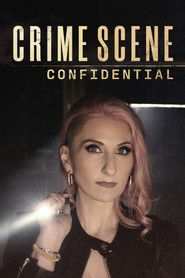
Crime Scene Confidential
2022
star 7.2In her twelve years as a Crime Scene Investigator for Orange County, Florida, CSI Alina Burroughs investigated some of the most startling and devastating cases in the country - from the tragic 2008 death of toddler Caylee Anthony to the 2016 Pulse nightclub massacre. Through her work she has learned that people may not always tell the truth, but the forensic evidence never lies. In this gripping ID series, Burroughs revisits controversial and shocking murder cases from across the country, taking a fresh look at the forensic evidence with the hope to bring more clarity to these complex crimes and closure to those the victims left behind.Post Scriptum - An Optimistic Look at the End of the World
2021
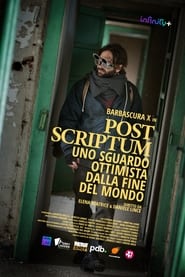
A docu-fiction about the present starting from the future: with an optimistic attitude and a sci-fi approach, the last man on Earth is looking for lost memories from Italy in 2020.Worst-Case Scenario
2010
Worst-Case Scenario
2010
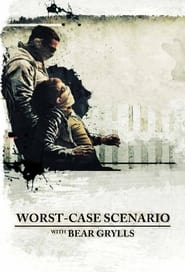
star 6.4Survival expert Bear Grylls puts himself into potentially life-threatening situations to show the how-to, hands-on, step-by-step instructions on everything you may need to know when faced with a worst case scenario.Francesco's Italy: Top to Toe
2006
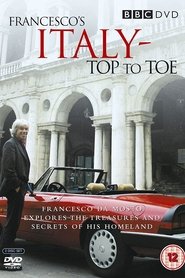
star 6Francesco's Italy: Top to Toe was a four-part BBC television series hosted by Francesco da Mosto and originally shown on BBC2 from 18 June to 2 July 2006. In the series, da Mosto drives his Alfa Romeo Spider the length of Italy, from North to South, exploring the architecture and traditions in different regions. This series was rebroadcast by The Travel Channel in January 2007 and repeated on BBC2 in May 2007 and BBC Four in October-November 2007. The series was rebroadcast in Canada on the Knowledge channel during July and August 2011. During Episode 1, "The Romantic North", da Mosto left his native Venice and his family, and visited the Fiat Factory in Turin, Romeo and Juliet's balcony in Verona and the city of Milan. During Episode 2, "The Garden of Italy", da Mosto visited a 19th century reproduction of Michaelangelo's David in Florence, the city of Siena and the town of Assisi. In Episode 3, entitled "The Heart of Italy" da Mosto visited the Trevi Fountain, explores Italians love/hate relationship with MusNew York Super Airport
2021
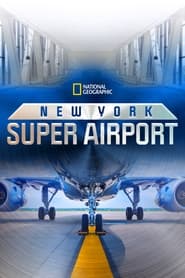
star 7.5This series charts the exclusive inside story of the 8-billion-dollar race to build America’s first major new airport in 25 years. 30 million passengers a year pass through LaGuardia Airport in New York, but this critical hub is run down and over capacity, causing delays. Over the course of 9 years, 7000 architects, engineers and construction workers must attempt the impossible; rebuild the entire airport from the ground up, to create a state-of-the-art, fully unified facility, without affecting its operation.Billy Connolly's Big Send Off
2014
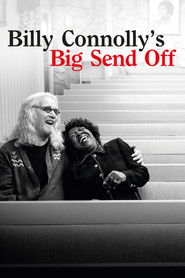
star 7.2Billy Connolly undertakes a personal journey to evaluate and explore the ways in which we deal with the end of our lives - across all religious, cultural and social boundaries. With his trademark charisma and curiosity, he discovers what death means to different communities and the diverse ways in which it is marked.The Real Murders of Orange County
2020
star 6.4Horrific and salacious cases rock Southern California's wealthy coastal community. From a murder-for-hire gone wrong to families turning on their own, viewers hear the harrowing tales of when privilege leads to problems and greed leads to murder.The Video Game Years
2021
The Video Game Years
2021
The show that examines the history, culture, and oddities of video game history promises to have you learning, laughing, and scratching your head.Connections
1978
Connections
1978
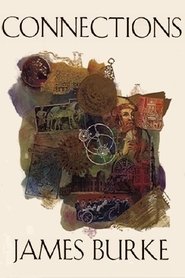
star 8.1Taking an interdisciplinary approach to the history of science and invention, Connections explores an "Alternative View of Change" that rejects the conventional linear and teleological view of historical progress. To demonstrate this view, Burke begins each episode with a particular event or innovation in the past (usually ancient or medieval) and traces a path from that event through a series of connections to a fundamental and essential aspect of the modern world.Henry and Anne: The Lovers Who Changed History
2014
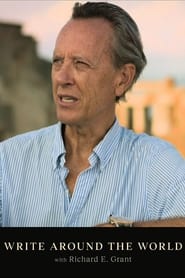
star 8Historian Dr Suzannah Lipscomb unfolds the extraordinary story of the tumultuous love affair between Henry VIII and Anne Boleyn, and asks: was it really love that brought them together – and was it love that tore them apart? Suzannah's journey will take her from Anne's childhood home at Hever Castle in Kent to the French palace where, some say, she learned the art of love. She will also visit Hampton Court, where Henry built the Great Hall for his new queen, and the Tower of London, where he had her beheaded.Write Around the World with Richard E Grant
2021
Richard E Grant packs his clothes and a bag of books and travels to the locations authors have fictionalised to gain a sense of the places that inspired their novels.The Hospital: In the Deep End
2024
Three Australian icons take a deep dive into a public hospital's frontline to find out how healthy the country's health system really is.Technology Connections
2015
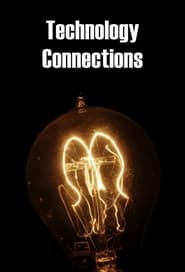
star 10Technology Connections is a series of YouTube videos that explores numerous aspects of technological history, including how things work, the way things developed, and anything in between. There is no limit to what kinds of tech could be covered — one minute you may be learning about how electron guns draw pictures on an analog television, and the next you might be discovering that your modern toaster is a piece of junk.Small Hands in a Big War
2014
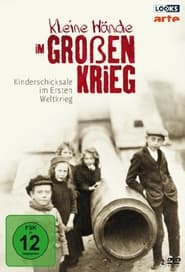
Small Hands In A Big War is the first docudrama bringing WWI to a young audience. In each episode we visit a different child, in a different country. We experience what the war was like for him or her related with one big topic: propaganda, revolution, honour etc.Eyewitness
2010
Eyewitness
2010
Eyewitness was a BBC series which examined how the police investigate crimes and the techniques they use to find their way through the complex web of memory. Ten people were secretly filmed as they witnessed what they believed to be a real crime - a knife attack in a Manchester pub. But when they were later interviewed by the police, their memories were radically different to each other's and to what really happened. In an extraordinary experiment with the Greater Manchester Police, the problem of eyewitness recollection was dramatically brought into focus, alongside the remarkable techniques used by the modern police to counter our unreliable memories.Koose Munisamy Veerappan
2023
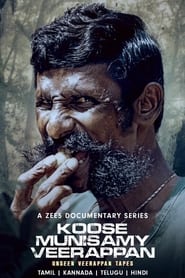
star 8.5The series explores the life of Veerappan and the people involved in the hunt for the infamous bandit. It showcases interviews with Veerappan, journalists, politicians and the victims’ families.Icons Unearthed: Marvel
2023
star 8Cast, crew, and experts reveal never-before-heard stories about the Marvel Cinematic Universe.Chessboxing
2012
Szpital
2013
Transparency: Pardarshita
2020
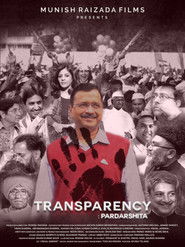
Transparency: Pardarshita, chronicles chase of a common man from offshore to India. It explores India Against Corruption movement or Anna Andolan along with backstage scenarios that led to subsequent birth to the Aam Aadmi Party.