Documentary TV Series - Page 27

Who Do You Think You Are?
2008
star 2.8Australian celebrities play detective as they go in search of their family history, revealing secrets from the past. Along the way there will be scandal, adultery, pioneers, bushrangers, artists and royalty. Join the trail of discovery to uncover where these celebrities came from as they find out just who they think they are.Ice Road Rescue
2015
Ice Road Rescue
2015
star 7.7Reality series following a group of truck drivers in the mountain passes of Norway, some of the most dangerous roads in all of Europe.Banged Up Abroad
2007
Banged Up Abroad
2007
star 7.6Documentary series where viewers are taken inside accounts of capture, incarceration, and terror far away from home with intimate personal interviews and dramatic reenactments.The Many Dream Journeys of Meme
1983
star 7.7The Many Dream Journeys of Meme is a Japanese anime television show created by Nippon Animation. The show originally aired from 1983 to 1985 and was primarily educational. Episodes usually dealt with scientific discoveries and inventions, though there were also a few futuristic and science fiction stories and situations. The series has been translated into many languages, including Spanish, French, Portuguese, Hebrew, and Arabic and Serbo-Croatian.Dr. 90210
2004
Dr. 90210
2004
star 6.3Dr. 90210 is an American reality television series focusing on plastic surgery in the wealthy suburb of Beverly Hills in Los Angeles, Southern California. The series began its run in 2004. Dr. 90210 gets its name from the zip code of the core of Beverly Hills, familiar to most viewers because of the former popular television series Beverly Hills, 90210. The show is produced by E!, but is broadcast on several other basic cable network channels, such as the Style Network. Each episode is approximately one hour long. The show stands out from other programs of this sort in that it also examines the lives of the doctors featured in its lineup.Matchday: Inside FC Barcelona
2019
star 7.7Inside FC Barcelona, which follows the famed soccer club through its 2018-2019 season.Heroes
2019
Heroes
2019
Ruthless Aggression
2020
Ruthless Aggression
2020
star 7.5For the first time ever, hear the true stories from those who lived it, and witness the emergence of an entire new generation of Superstars, who would change WWE forever. WWE Ruthless Aggression will feature brand-new interviews with Cena, Batista, Orton, Triple H, Kurt Angle, Mark Henry, Becky Lynch, Kevin Owens, The Miz, Paul Heyman, Bruce Prichard and many more, giving WWE fans firsthand accounts of events that transpired in front of, and behind, the camera. Each episode is also packed with rare and never-before-seen footage, providing unprecedented access to the Ruthless Aggression Era.Shin Nihon Fudoki
2011
Shin Nihon Fudoki
2011
star 8A full-scale travel documentary program that portrays the beautiful landscapes, lifestyles, and activities of people across various regions in Japan. Presented in an omnibus format, it allows viewers to immerse themselves in the nostalgic and irreplaceable scenery of Japan.Backlight
2002
Backlight
2002
star 7.4Tegenlicht in Dutch or Backlight in English is a series of television documentaries by the VPRO, a Dutch public broadcasting organisation. Backlight "aims to grasp the quintessence of prominent trends and developments" in the practice of critical journalism, and tries to improve understanding of the intricate inner workings of our modern society.Inside the Factory
2015
Inside the Factory
2015
star 7.9Paddy McGuinness and Cherry Healey get exclusive access to some of the largest factories in Britain to reveal the secrets behind production on an epic scale.The Deep End
2010
The Deep End
2010
star 6The tragedies and triumphs of five earnest twenty-something first-year associates fighting to stay afloat in one of Los Angeles' top law firms.O.J.: Made in America
2016
star 8The rise and fall of American football star, O.J. Simpson, from his days growing up in Los Angeles to his murder trial that polarized the country.Trails to Oishii Tokyo
2019
Delicious food from Tokyo's markets! Learn about the amazing ingredients which are sourced from across Japan and sold at Tokyo's fresh food markets.I Shouldn't Be Alive
2005
I Shouldn't Be Alive
2005
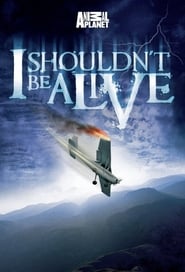
star 7The show features accounts of individuals and groups caught in dangerous scenarios, presented both through interviews and dramatic reenactments. The main focus is how the survivors survived and the decisions they made that kept them alive.La Loba
2010
La Loba
2010
star 6.7La Loba is a Mexican telenovela by TV Azteca. It premiered on 2010. The protagonists are the international stars Ivonne Montero and Mauricio Islas. Grand actors such as Regina Torne, Omar Fierro, Ana Ciochetti, Fernando Becerril and Marta Aura also included as cast members. In the final 2 weeks, episodes are halved to give way to Maricarmen's new telenovela, Entre el Amor y el DeseoUFO
2021
UFO
2021
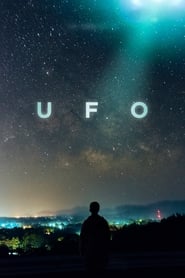
star 7.3Ignited by a bombshell story revealing the Pentagon had been tracking UFOs for years, the series examines the history of the phenomenon through cultural and political touchpoints, including testimony from eyewitnesses across the country.Cachitos de hierro y cromo
2013
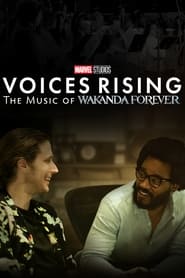
star 7.7Cachitos de hierro y cromo is a Spanish musical-themed documentary program, directed by Jero Rodríguez and hosted by Virginia Díaz. It is an unapologetic musical display of RTVE's sound legacy in the form of performances on the set of programs such as 'Aplauso', 'Galas del Sábado', 'Mapa Sonoro', 'Zona Franca' or 'Los Conciertos de Radio 3'. For nearly 60 years, artists and other specimens have stormed viewers' screens. The result is a polyphony of images and memories that includes everything from James Brown to Camela, from Perales to REM, from Gabinete to Violent Femmes. And so all the time. Our secret weapon has been the historical archive of TVE, the repository of Spanish collective memory for more than half a century.Voices Rising: The Music of Wakanda Forever
2023
star 4.8A documentary series focusing on the music from Marvel Studios’ Black Panther: Wakanda Forever. The show centers on the songs and score from the movie and features interview with director Ryan Coogler, composer Ludwig Göransson, among others.