Documentary TV Series - Page 440

Secret Society
1987
Secret Society
1987
A politically charged mini-series researched and written by Duncan Campbell which saw dramatic Special Branch raids on BBC Scotland. An entire production office was loaded into transit vans and confiscated by the police. + One: 'The Secret Constitution' about secret Cabinet committees that amount to a secret decision making system at the highest levels of power in the United Kingdom. + Two: 'In Time of Crisis' about secret preparations for war that began in 1982 within every NATO country. This programme revealed what Britain would do. + Three: 'A Gap In Our Defences' about bungling defence manufacturers and incompetent military planners who have botched every new radar system that Britain has installed since World War II. + Four: 'We're All Data Now' about the Data Protection Act. + Five: 'Association of Chief Police Officers' and how Government policy and actions are determined in the fields of law and order. + Six: 'Communications' with particular reference to Zircon spy satellites ...Traumfrau Gesucht
2012
Rise of the Machines
2014
Rise of the Machines
2014
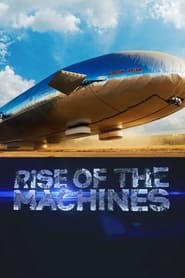
star 7.9It is 2014 and the machines have not taken over…yet. The newest, most technologically advanced series from H2™, Rise of the Machines, reveals how the inventions behind the world’s most extreme machines have enabled them to evolve beyond humanity’s wildest imagination. This visually stunning series uses mind-blowing CGI animations to reveal the extraordinary engineering at the heart of the world’s most extreme machines. From the world’s biggest mega truck to the world’s fastest train to a revolutionary heavy lift ship, ground breaking CGI animation explodes the machines apart to reveal the ingenious inventions hidden under their skin that enables the teams who drive, fly and sail them to be at the top of their game. This series takes us inside these machines in close up detail and explores what helps these elite ships, trucks, trains and aircrafts rise above all others.Battle for the Moon: 1957-1969
2019
star 8July 20, 1969. Nearly six hundred million people have their eyes glued to their televisions: Neil Armstrong is just about to make one of mankind’s oldest dreams come true. After more than twenty years of intense struggle between the Americans and the Soviets, the biggest adventure for humanity in the 20th century has just been achieved. As a climax of the Cold War, the conquest of the moon was a true saga, passionate, epic and filled with twists and turns. It wasn’t just a scientific competition between East and West; It was also a fabulous adventure combining political history, technological exploits, acts of bravery and personal dramas.Shot in the Dark
2017
Shot in the Dark
2017
star 7.3Three rival freelance stringers scour the streets at night to film crime scenes, fires, accidents -- and anything else they can sell to news outlets.Austria from Above: Jewels of the Country
2016
star 7Georg Riha is and will remain the master of aerial shots. In this series, Riha uses aerial shots only. In shootings that took several years he flew over almost all of Austria and shows the country's most beautiful places from the aerial perspective during the course of a year.Fatties
2020
Fatties
2020
Eight brave participants in the transformation will share their story. And they discover that not only indiscipline in eating, but also emotional overeating and other factors are behind their excess weight. Those that influence the development of overweight everyone. On the way to their dream figure, all the participants of the Fatty project have to grapple not only with unfamiliar foods or healthy eating, but also with healthy and regular exercise. In addition, they have to get their lives in order, which is a problematic trigger for becoming overweight.Game Changers
2024
Game Changers
2024
The series explores the history behind the most iconic games and how they went on to influence the world of pop culture and beyond.BORDELESS – Aぇ! group documentary
2024
The series will depict the trial and error and growth of the five members as a whole, as well as introduce a number of previously unreleased footage. In the long interviews with each member, previously untold "episodes only the members themselves know" will be revealed one after another.The 43
2019
The 43
2019
star 6.7This docuseries disputes the Mexican government's account of how and why 43 students from Ayotzinapa Rural Teachers' College vanished in Iguala in 2014.Harrys schönste Zeit
2019
Harrys schönste Zeit
2019
From Ice to Fire: The Incredible Science of Temperature
2018
star 7Dr Helen Czerski goes on a spectacular journey to the extremes of the temperature scale, where everyday laws of physics break down and a new world of scientific possibility begins.Schrankalarm
2015
Schrankalarm
2015
The Widower
2021
The Widower
2021
star 6Explore behind the scenes of one of the country's most confounding murder investigations, revealing a tale of evil and a tireless quest for justice in real time.Almost Unsolved
2023
Almost Unsolved
2023
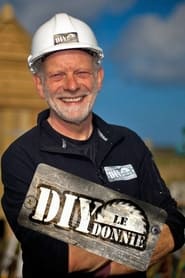
star 10A true crime series that explores murder cases where investigations stalled or went cold; often for decades. Featuring interviews with the experts and law enforcement officials who worked these cases along with dramatic re-enactments we follow detectives, scientists and even amateur sleuths that dedicate their lives to bringing justice and closure to the cases that nearly went unsolved... Almost.DIY le Donnie
2014
DIY le Donnie
2014
DIY series presented by Donnie 'Dòtaman' MacLeod. Broadcast in Gaelic with English SubtitlesWhen the Louvre Museum Meets the Forbidden City
2010
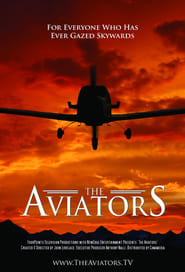
The Louvre and the Forbidden City are two representative symbols of Eastern and Western civilizations. This film uses these two museums as carriers, cuts through the perspective of local audiences, emphasizes the parallel and coexistence of civilizations, and integrates the understanding of different civilizations. It is reflected in the display and appreciation of artworks, and reflects the museum’s responsibility for the sharing and promotion of human civilization.The Aviators
2010
The Aviators
2010
star 4.2The Aviators is an award-winning weekly documentary-lifestyle-science TV series featuring interesting people, the latest aircraft, current technology and fly-in destinations. The show's site describes subject matter as follows: "We will take you behind the scenes to show you how airline pilots train, how planes are built, and how ATC works. We will profile aviation businesses and showcase aviation products. We will provide safety tips for private and recreational pilots and career tips for professional pilots."